IN THE POTAGER GARDEN – SPRING 2026
Report from the POTAGER garden, OCTOBER 2026
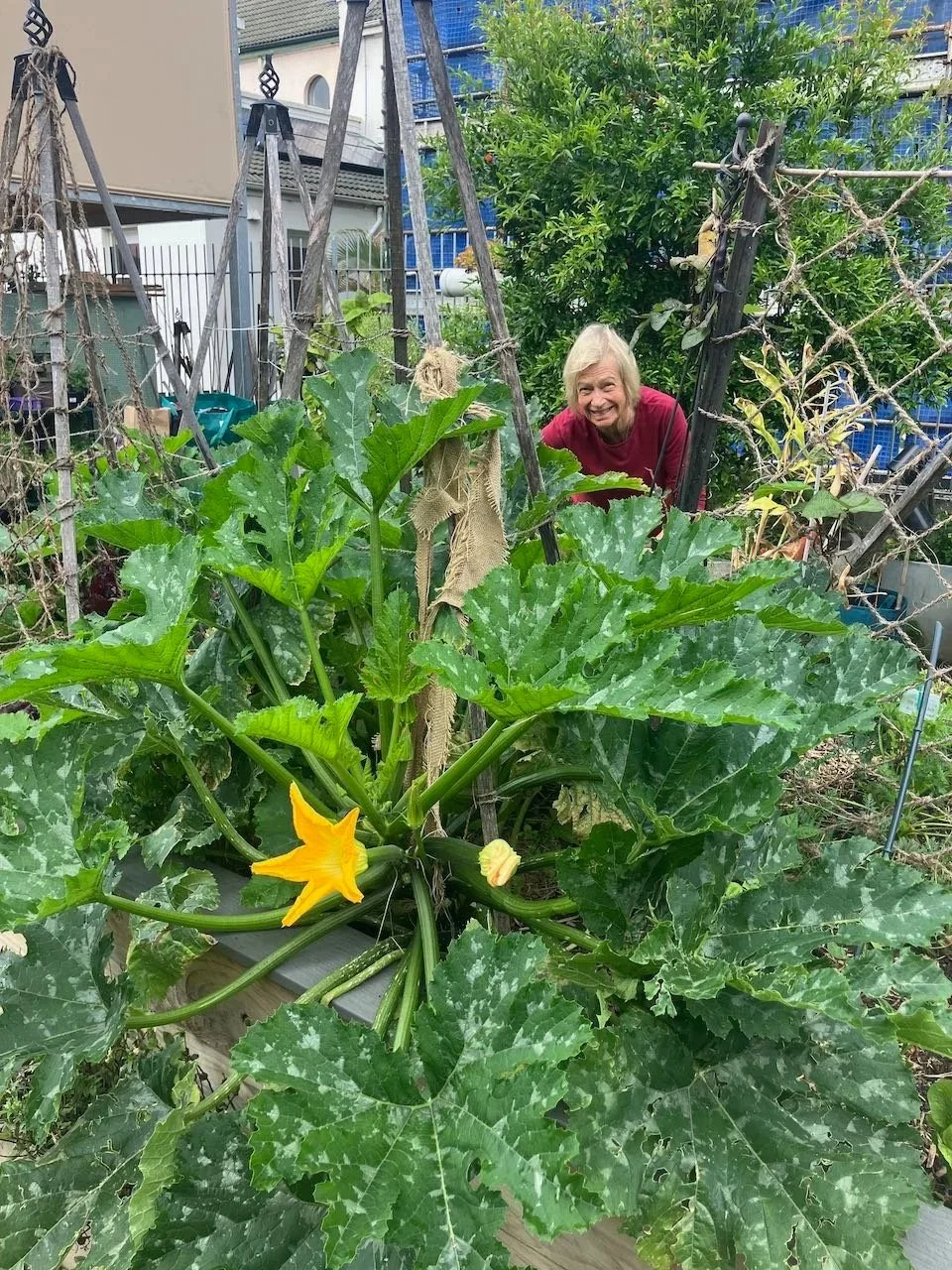
Unruly zucchini being encouraged to grow upwards rather than outwards, with a hessian tie supporting the main stem. (Happy gardener in the background.)
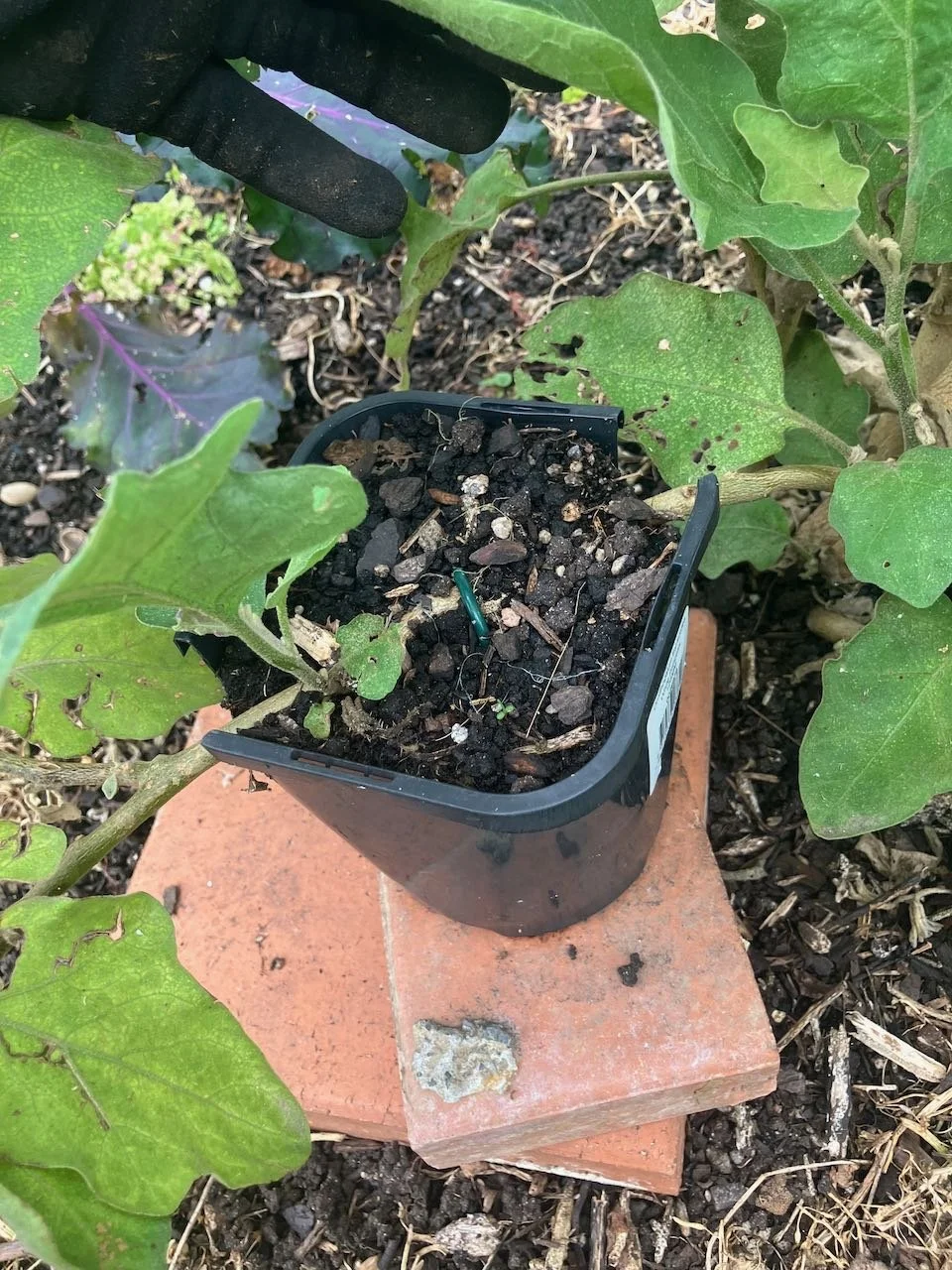
Encouraging a new baby eggplant by pinning a branch into soil until it takes root..
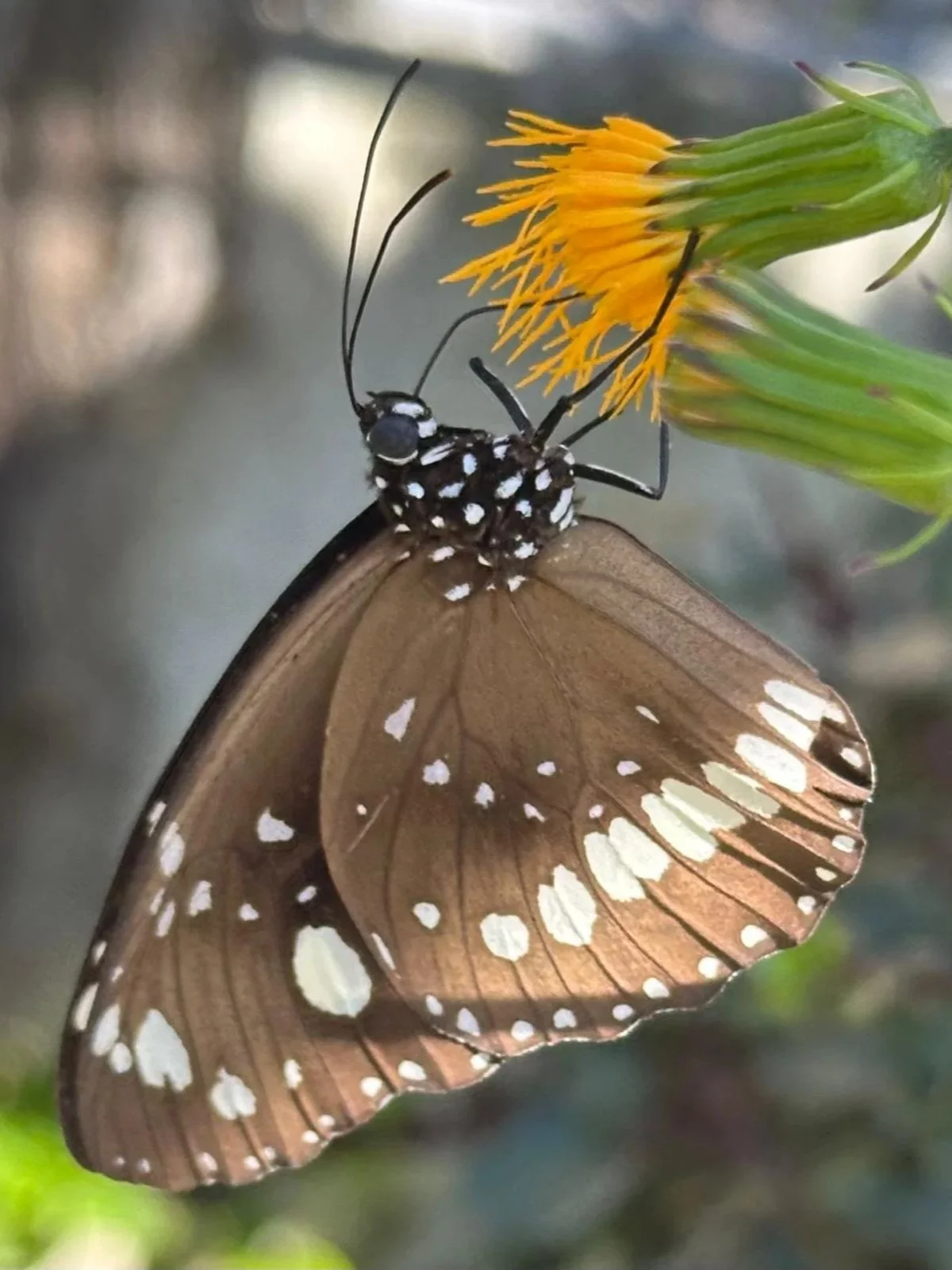
Australian Crow butterfly on a striking yellow Okinawa spinach flower. The larvae feed on plants with toxic milky sap like oleanders or fig trees, and this makes the adult butterfly taste foul to birds and other predators. (Photo: Liz Silverstone)
Successes
The citrus trees are doing better with regular fertiliser in small amounts around the drip line. The bonus is that citrus attracts Orchid Swallowtail butterflies. We have also seen an Australian Crow butterfly.
We have replaced the mandarin tree with a persimmon, which had just started to shoot in late October. The mandarin was struggling and nothing we tried helped.
The ‘Mary Washington’ asparagus is going gang-busters. This is the second year for the three crowns in the small bed near the gate, and although we harvested a few chunky spears initially, we are letting the rest shoot up to produce the plant's distinctive feathery foliage. The idea is to build up the crowns over the first few years, to ensure more substantial future harvests.
The method of growing zucchini vertically supported by a pyramid of stakes was very successful last summer, and we are trying it again this year. It allows us to fit more plants in the same area, which means more fruit for all.
The eggplant in the wicking bed was very successful over winter, producing loads of fruit. One plant is coming back very well this season but the other unfortunately rotted. We are attempting to propagate by ‘layering’ the healthy plant – laying a section of branch in a pot to encourage it to strike roots.
Following a successful crop of pomegranates, both trees have responded to a good pruning with a burst of new growth.
The best crop over winter was the salad greens, including perpetual spinach, green large-leaf sorrel, different lettuces and of course water cress. The green sorrel is multiplying well as the weather warms.
Some cherry tomato seedlings we started at the beginning of winter appear to be thriving. Maybe they have had a better chance to establish before all the pests and viruses arrive. We are also fertilising them more regularly.
Adding lime now and again to the gedye bins has improved the pH of the compost and improved plant growth.
Plans
Some objectives for spring and beyond:
continually improve soil structure.
chop and drop all the watercress so the seeds germinate next season.
grow some edamame
replace jute netting with reo-mesh
have no bare soil surface
net against pests, especially fruit fly which affected the pomegranates.
We’re also thinking of having regular gardeners adopt a crop, specialise in it and feed back to the working bees.