IN THE BUSH FOOD GARDEN – SPRING 2026
Report from the BUSH FOOD garden, OCTOBER 2026
What’s bringing us joy
Our ‘Peter’s Thornless’ raspberry (near the back gate) has been producing lots of fruit – not quite as tangy as European varieties but gorgeous-looking as well as sweet and juicy if left on the plant until fully ripe.
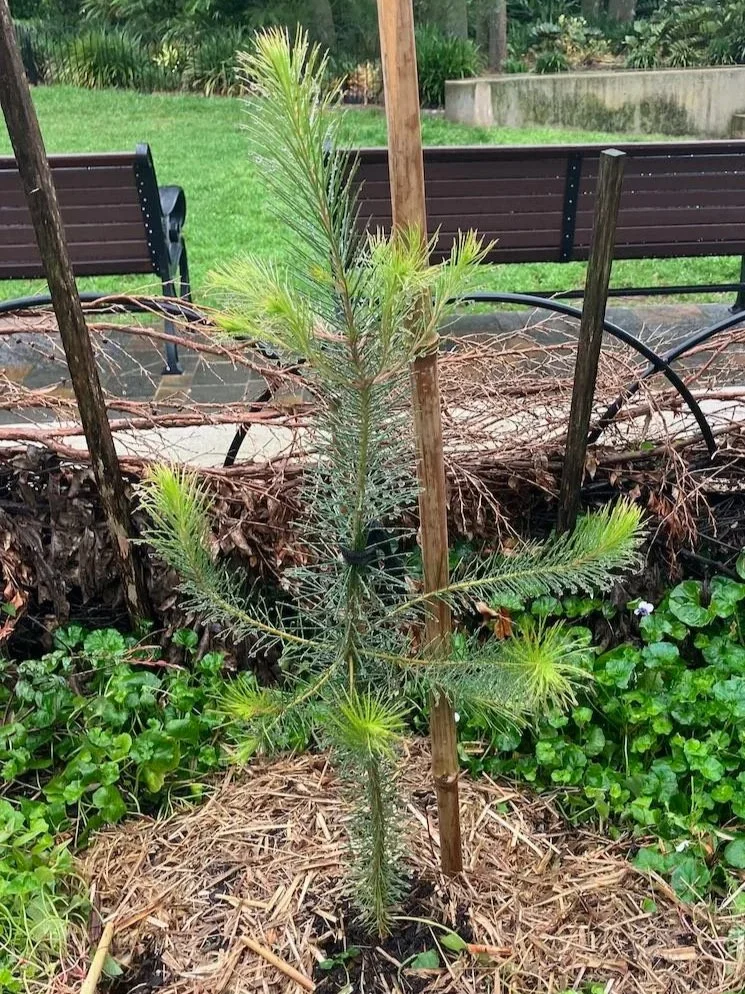
After some keen detective work, we were able to track down a pine-leafed geebung (Persoonia pinnifolia) from Sutherland Shire Community Nursery. They are notoriously difficult to propagate soft, pine-like foliage and long, terminal racemes of small yellow flowers in late winter to summer
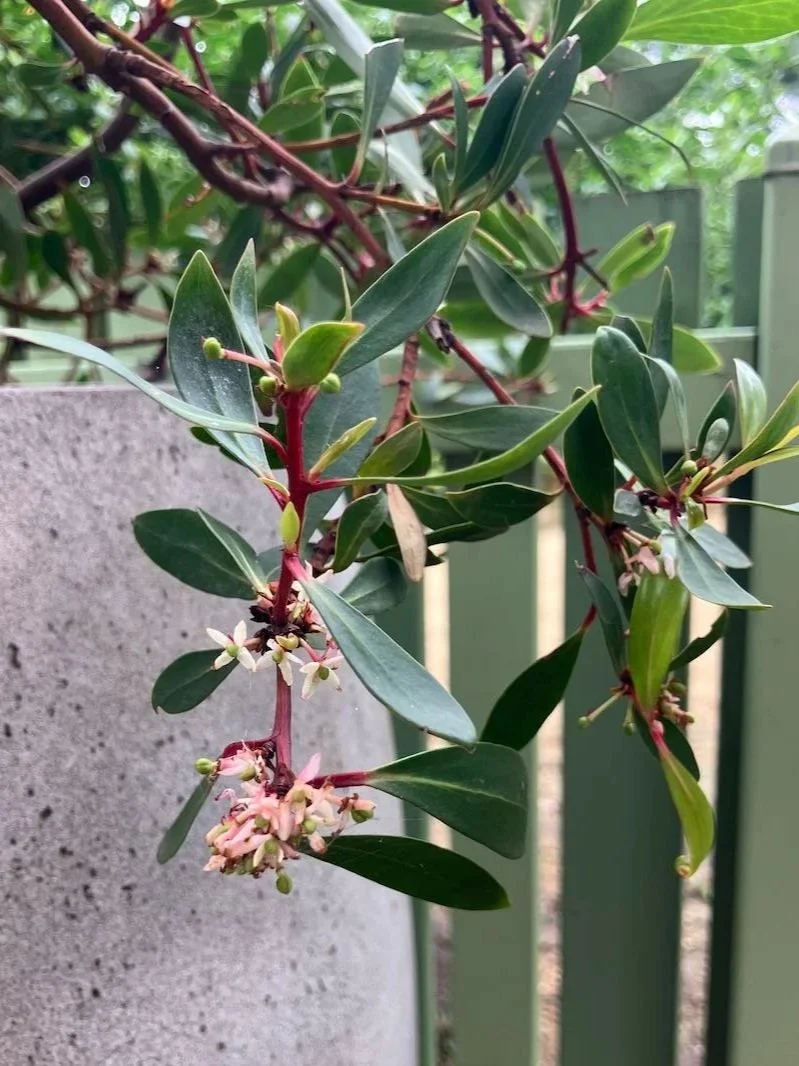
Both the male and female Tasmanian Pepperberry plants flowered at the same time this year, and it looks like their union has been consummated, as little clusters of what look like baby berries have appeared.
The chocolate lily (Arthropodium strictum) under the Burdekin plum tree has put out multiple flower stems, with delicate light purple blooms that smell like chocolate.
We’ve added two native climbers – Hardenbergia violacea ‘Violet Eyes’ and ‘White Out’ – to soften the fence next to the shed now that the native mulberry has been cut back – and a couple of lovely paper daisy plants now brighten the bed under the Burdekin plum.
More flowers – the bees are loving the sweet pink blossoms on the Geraldton wax, and there are buds on the Prostanthera Crocodyloides (aka Crocodile mint) under the lemon-scented tea tree, along with a carpet of native violets .
What we’re keeping a hopeful eye on
We were thrilled to be able to track down eight seedlings of the fleshier variety of murnong or yam daisy (Microseris walteri), which are now in the ground and seem to be settling in well. The tubers will form as the plants go dormant over summer and can be harvested in autumn – although there are some indications we should skip a year in order to give them time to grow larger.
Despite flowering in late winter, our ‘Five Corners’ plants (Styphelia viridis) are showing no signs of any fruit yet. We’d love to sample these ‘bush lollies’ – but it seems patience is required.
The river mint looks like it will survive its mystery damage.
Multiple new shoots have appeared on the native rosella (Hibiscus heterophyllus) after a substantial prune. We’re hopeful it will return to its bushy form decked out in pink, jam-destined petals – but we are also nurturing a young plant as a backup.
The resilient native mulberry is covered in clumps of baby leaves after its severe cutting back, but we’re a bit concerned that some of this new growth is not looking very healthy. Fingers crossed.
Activities/plans
A couple of members attended the Indigenous Food Fair at Carriageworks on 26 September, experiencing several excellent cooking demonstrations. They came away with a wealth of inspiration (and a page of recipes), as well as ideas for plants to add to the garden (sea parsley aka sea celery for one). They also scored some cuttings of Byron Bay chef Mindy Woods’ own karkalla (pigface) plant, which we are trying to strike; Mindy apparently keeps hers nice and salty with pasta water from her restaurant.
We need to make some decisions about our dwarf plum pine (Podocarpus spinulosus), as we have three males, none of which will give us any of this interesting-sounding fruit. It seems the only option is to buy another three seedlings and hope one is a female; otherwise there is not much point in hanging on to the current three plants.