CLOSE-UP – THE COLOURFUL WORLD OF NASTURTIUMS
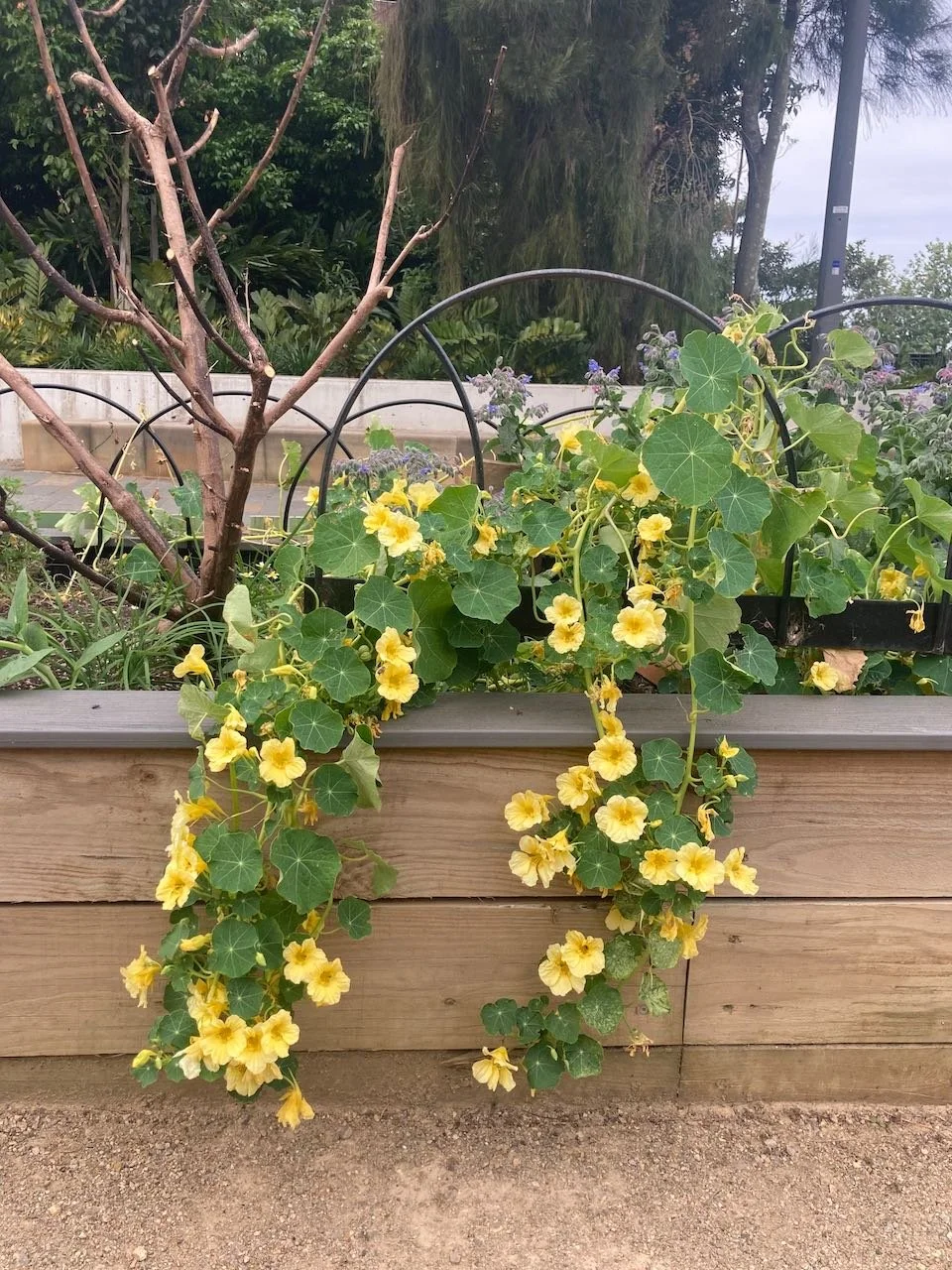
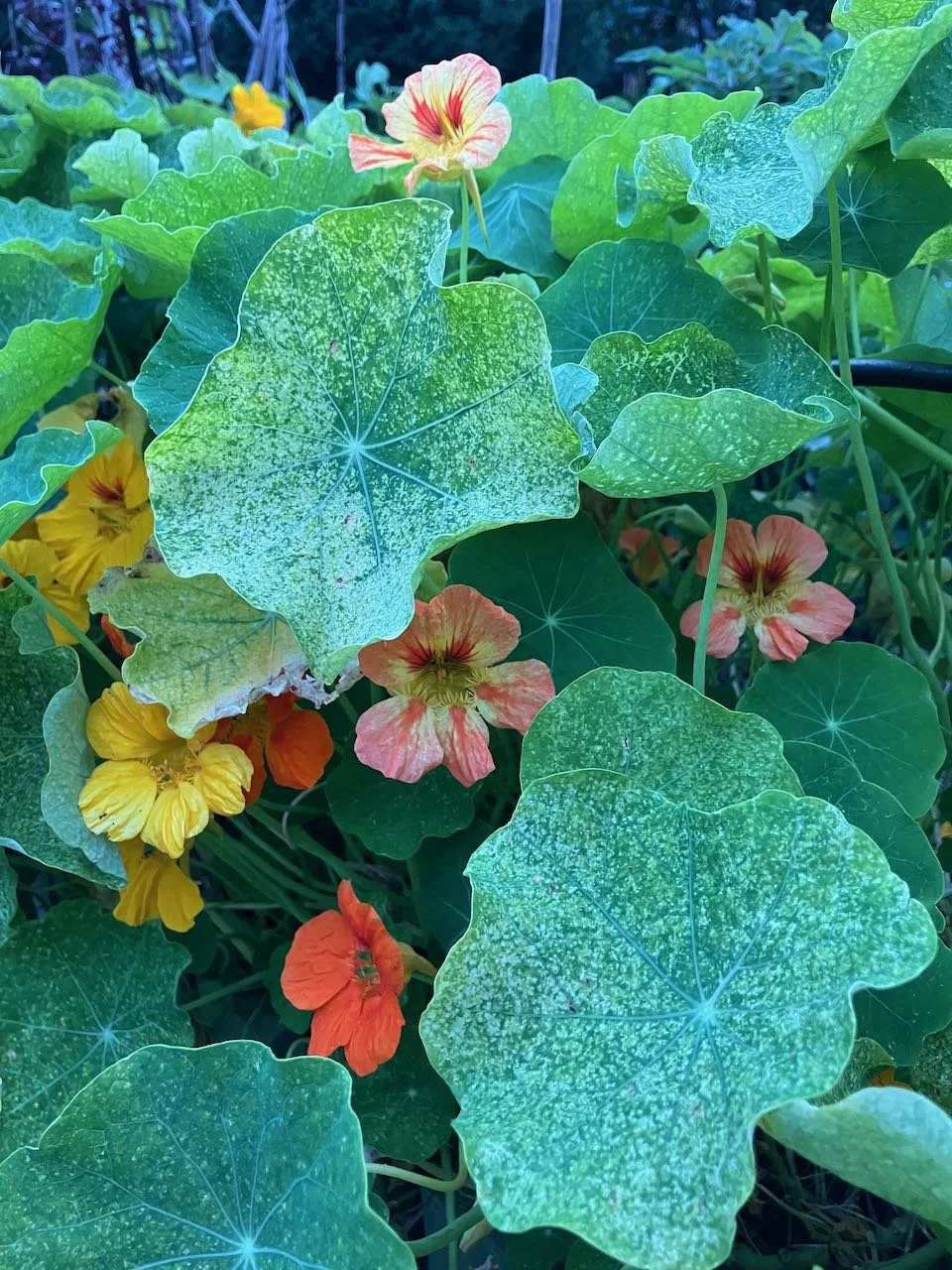
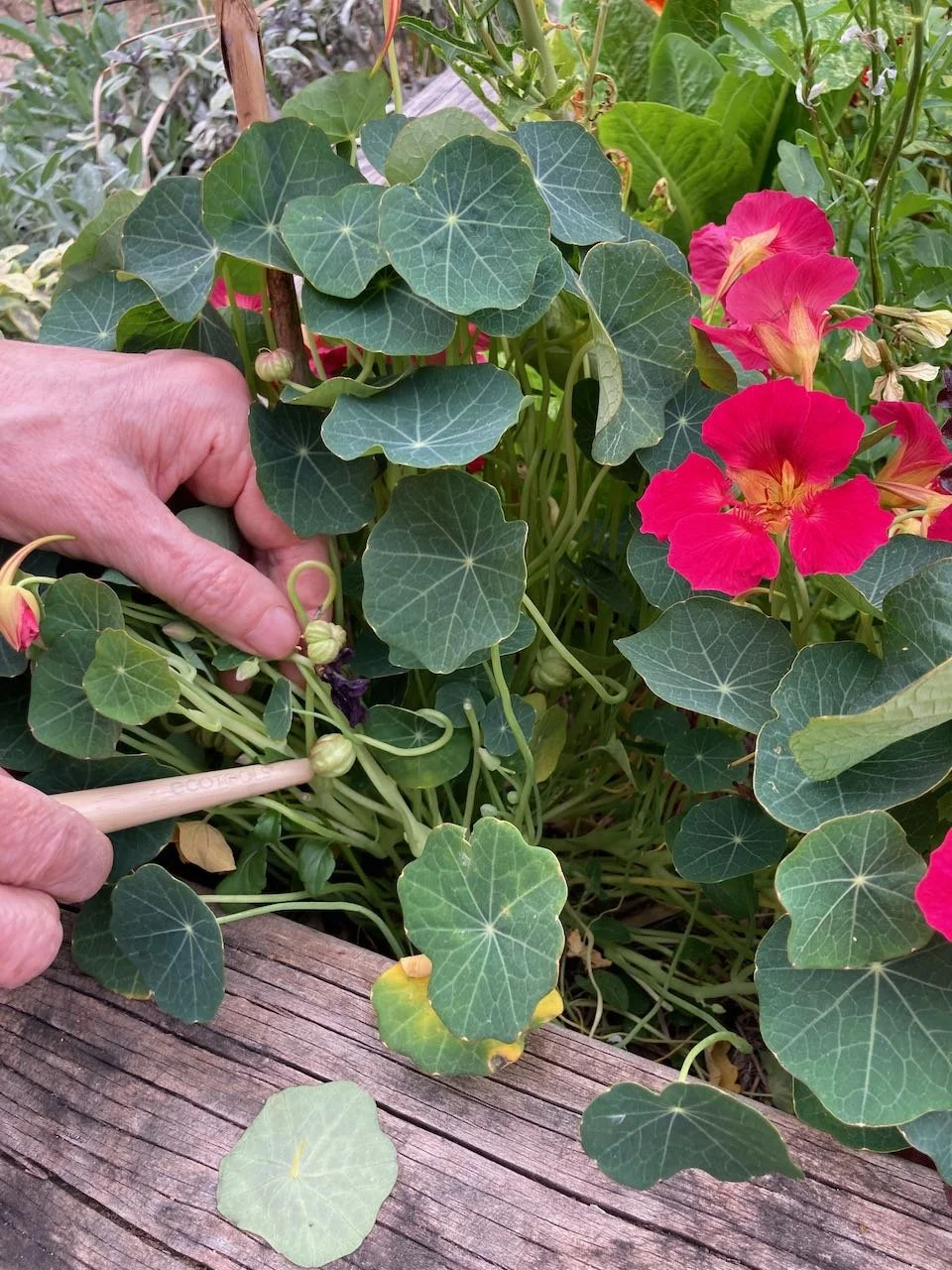
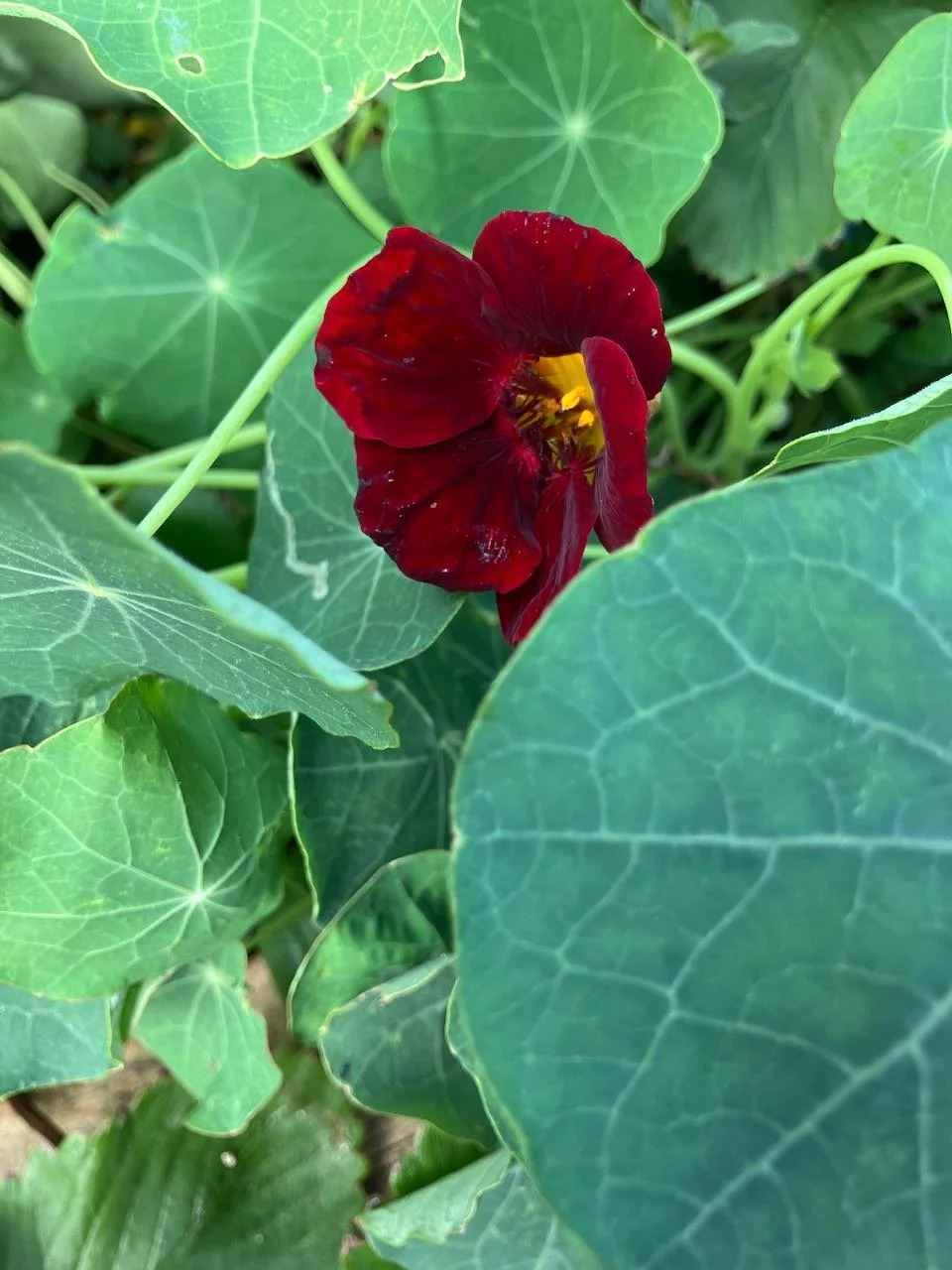
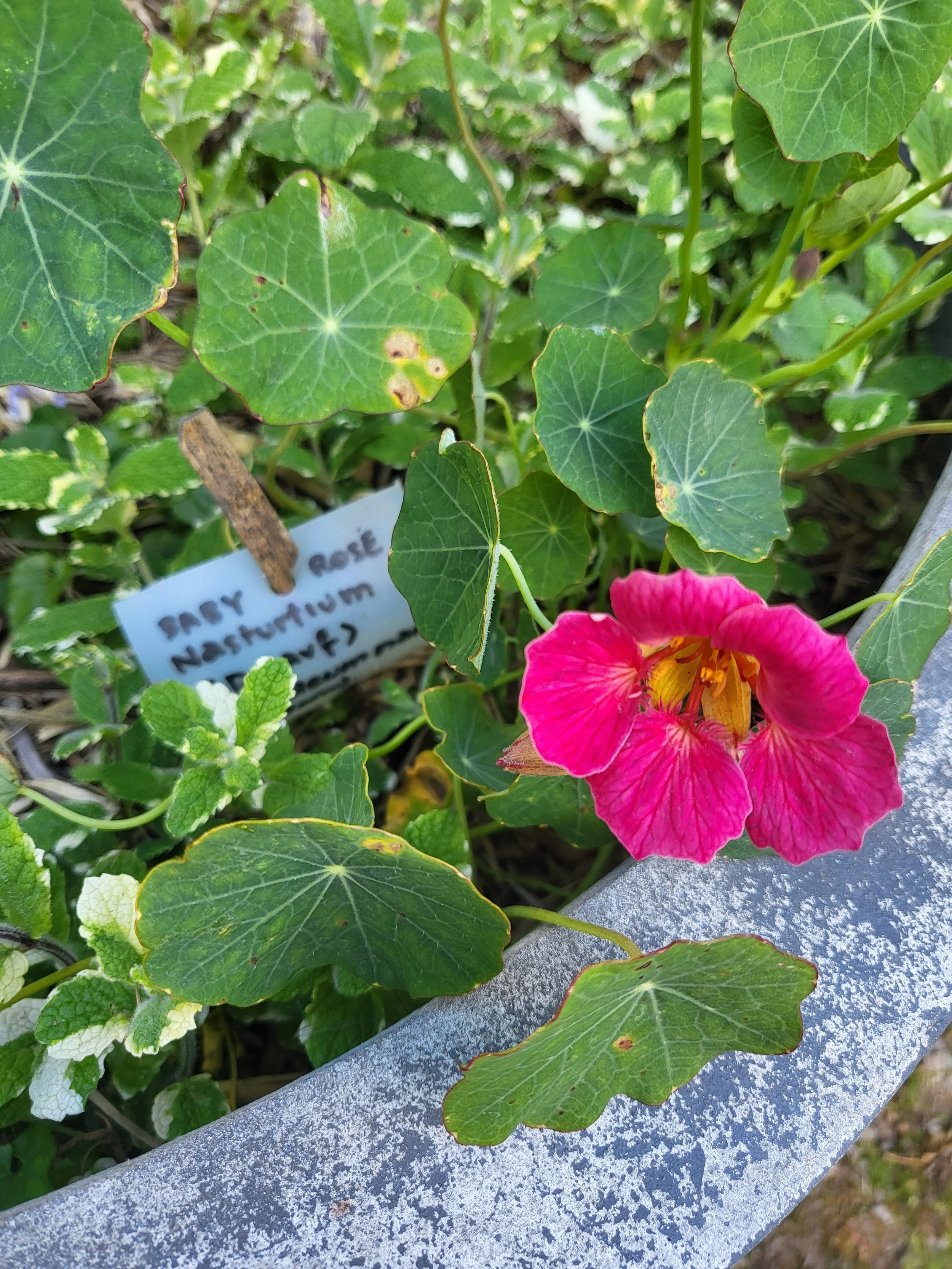
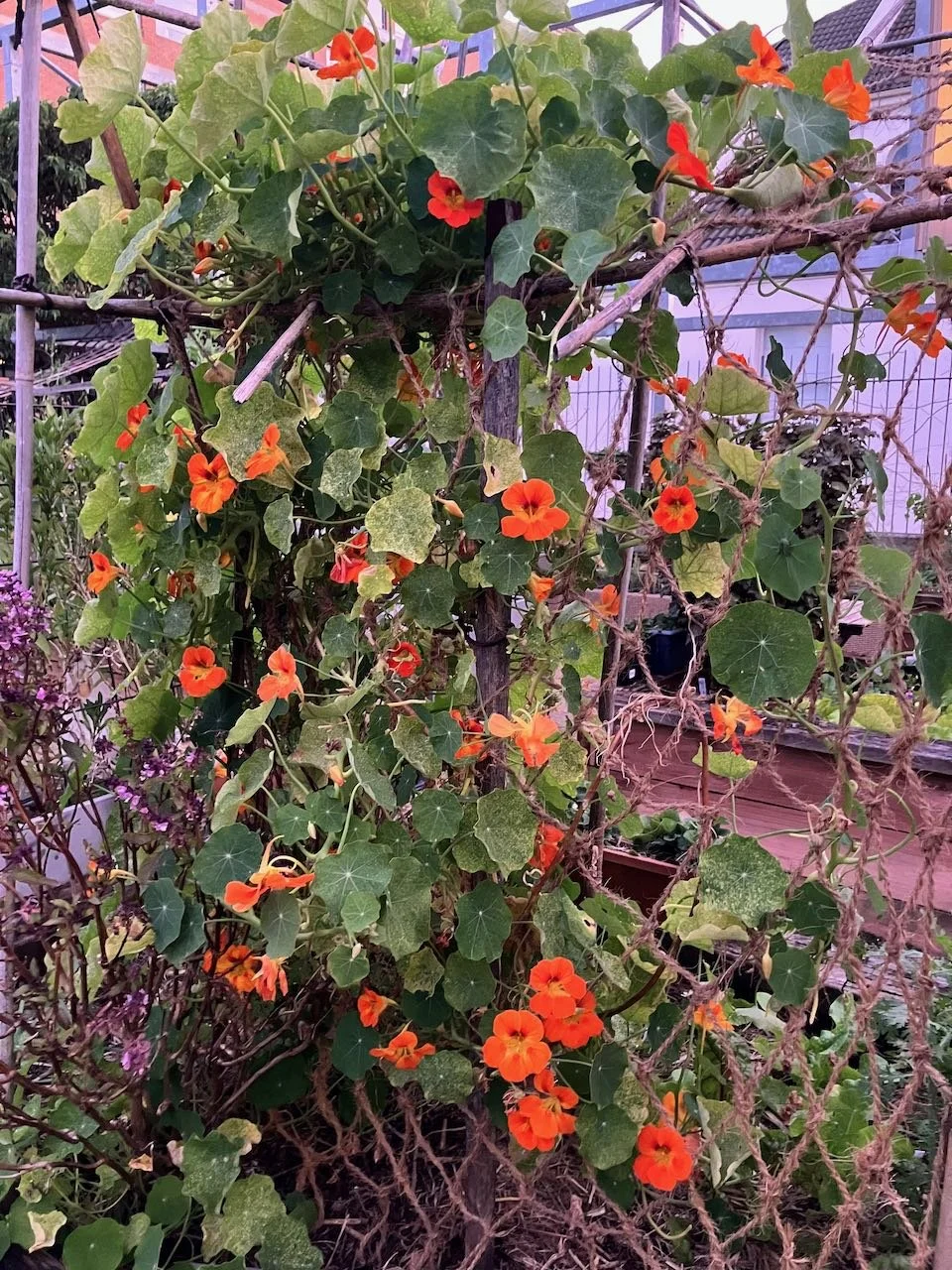
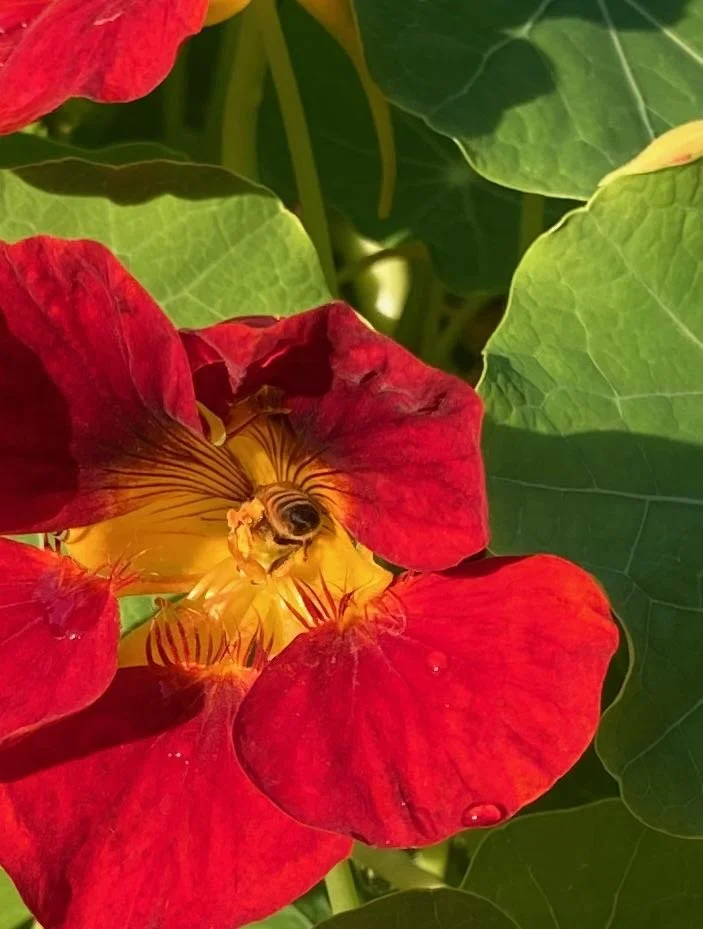
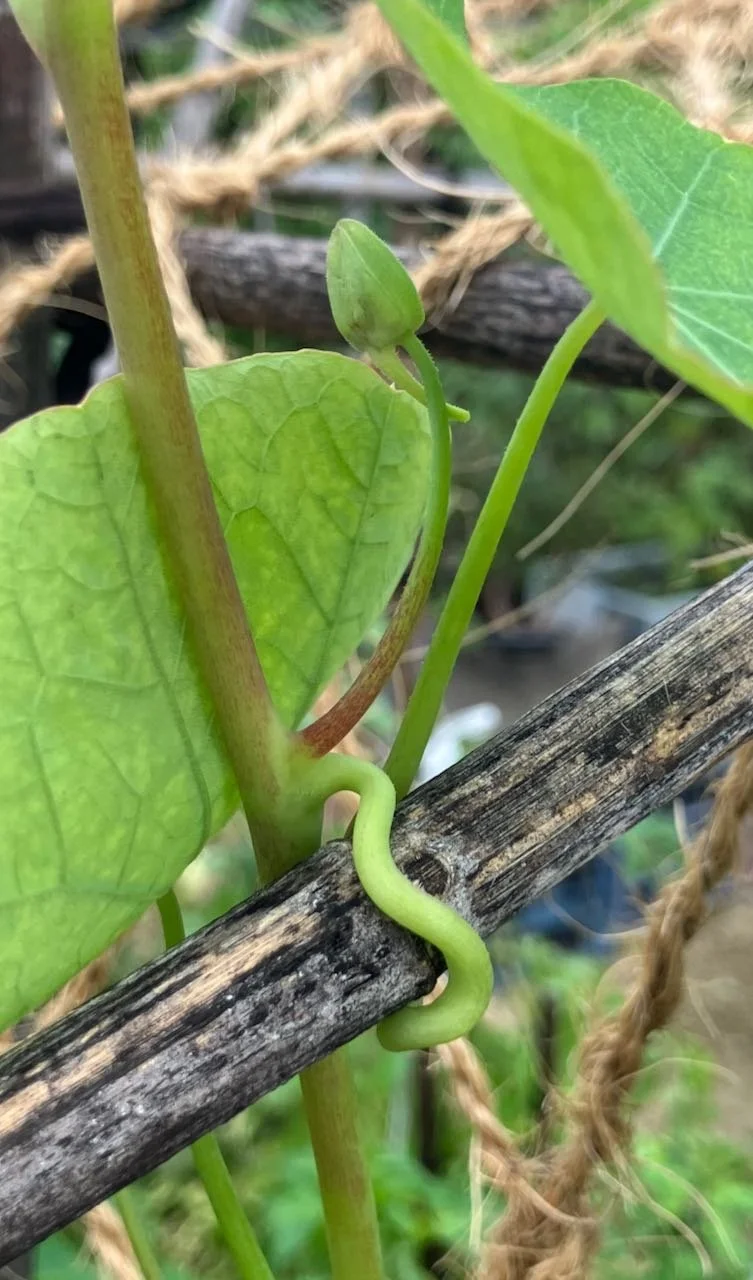
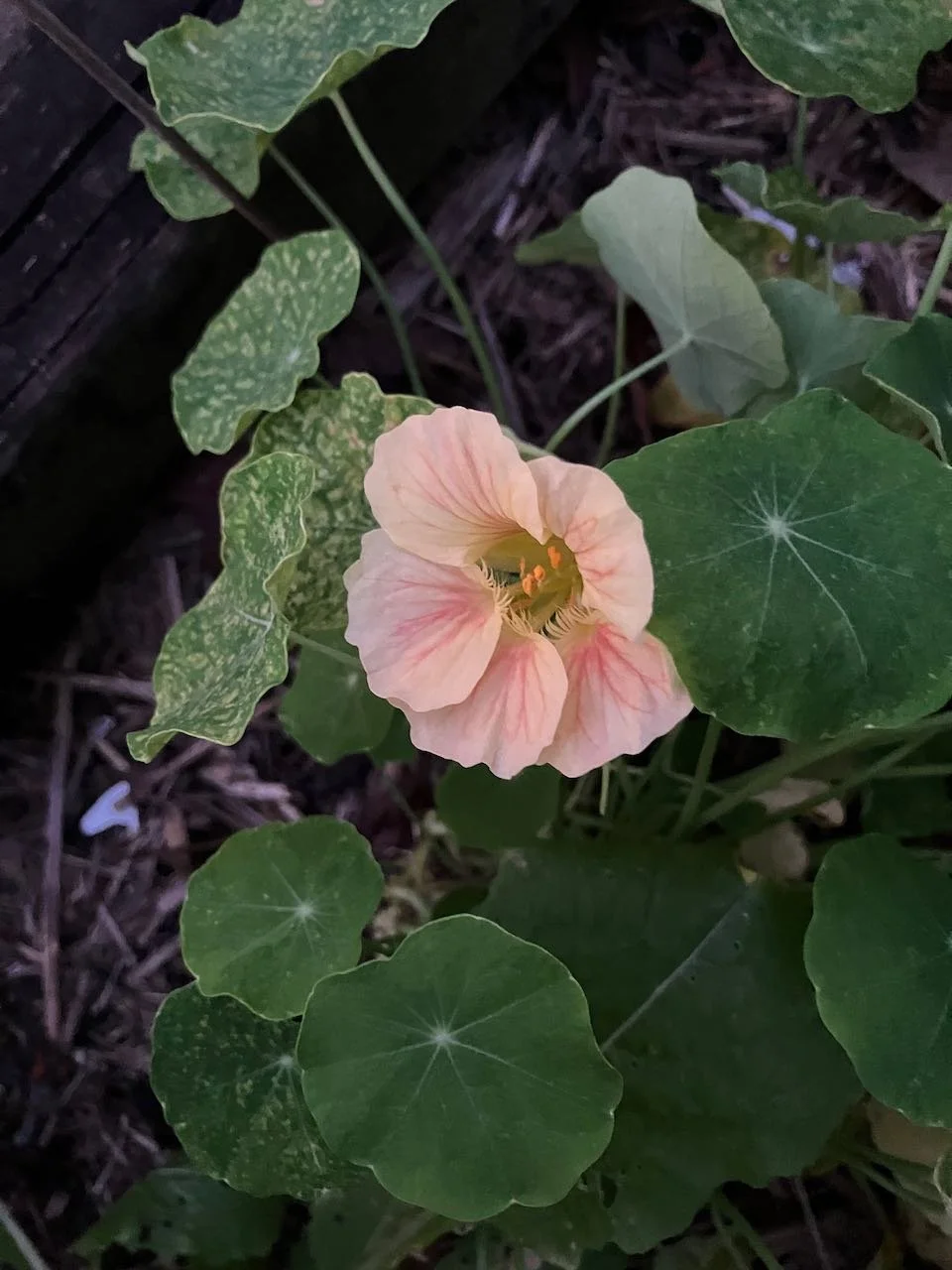
If you drop by the garden and notice colourful flowers in shades of yellow, orange, red and pink, framed by large, nearly circular leaves, you may be looking at nasturtiums. We grow several varieties of this lovely but unassuming plant, including the common mounding, trailing or semi-trailing cultivars, Tropaeolum majus, as well as a couple of newer dwarf types, Tropolaeum minus (or nanum), which do well around our vegetables and fruit trees.
A quick-growing, unfussy annual that’s both beautiful and useful, nasturtiums are one of our favourite plants. In our coastal Sydney climate they flower from spring into autumn, with the plants eventually dying back (or being cut back) in winter, only to pop up again from dropped seeds once temperatures start to warm.
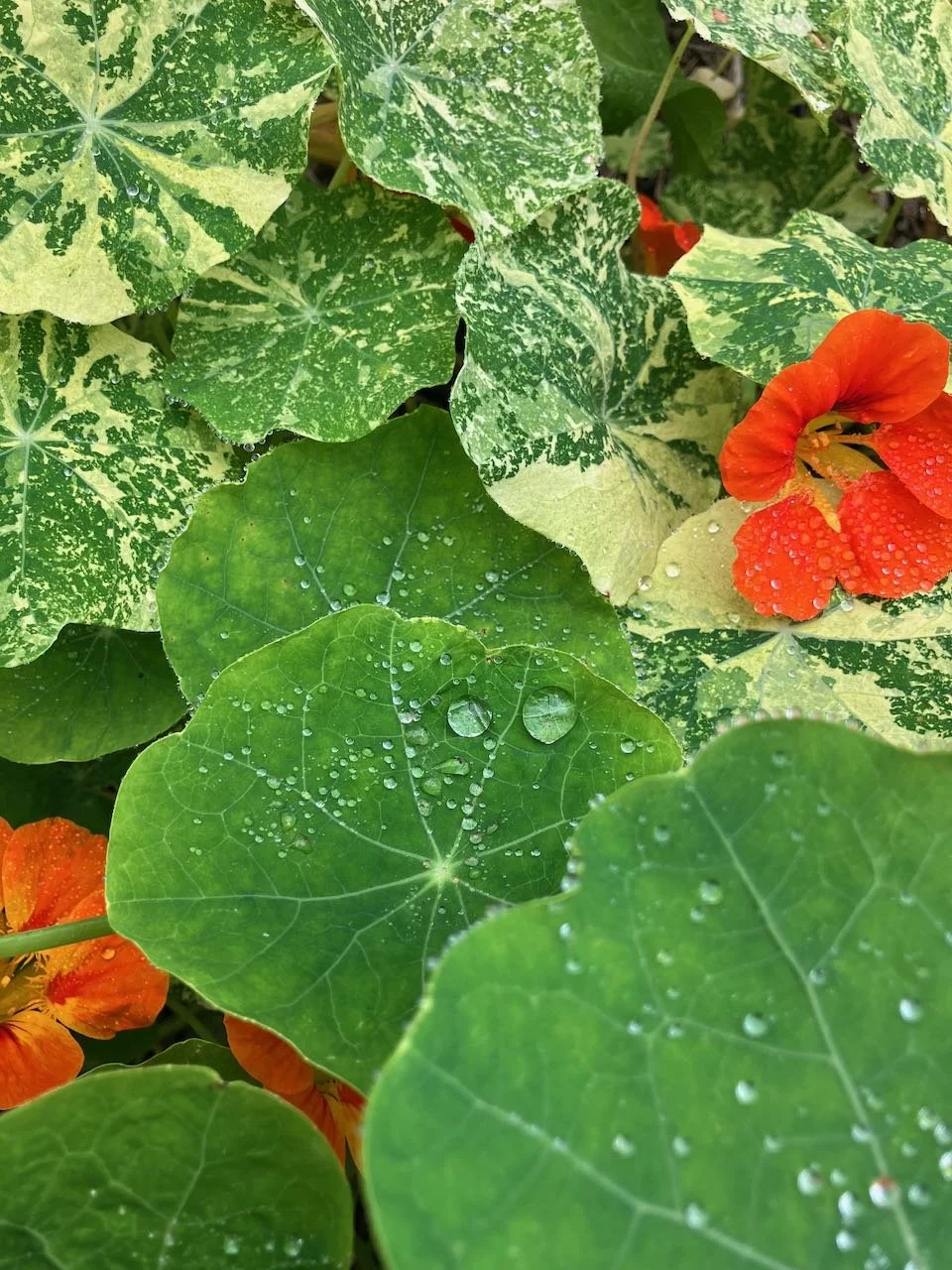
They are particularly pretty after rain or dew, as the leaves, like lotus leaves, can repel water to form large droplets in their centre.
According to Wikipedia, the flowers have as much vitamin C as parsley, as well as high concentrations of lutein, a carotenoid which may support eye health. It’s the lutein that gives the orange flowers their vibrant colour – at dusk, they almost seem to glow in the waning light.
Altogether delicious
Visitors to the garden frequently admire their beauty – but are amazed to discover that almost the whole plant is edible!
Both the flowers and leaves have a soft, almost velvety texture and pleasantly peppery taste similar to rocket or watercress. Try scattering a few flowers, torn large leaves or whole baby leaves on top of salad. This works particularly well with the magnificently variegated Alaska cultivar [pictured above]. Or try the leaves and stems in a stir fry or pesto.
Tip: to enjoy leaves fresh, pick the whole stem and put it in water when you get home (trim the ends of the stems first). Wash leaves and remove stems before using in salad.
Even the green (unripe) seed pods can be eaten: pickle them in vinegar and they make a good home-grown alternative to capers.
A garden ally
Nasturtiums also have a useful role in our pesticide-free integrated pest management approach as a trap or decoy crop. We use diverse plantings to make it harder for pest species to target their preferred plants; nasturtiums in particular attract aphids and small white cabbage butterflies, Pieris rapae, which can reproduce very quickly and overwhelm slower-growing broad beans and brassicas. By attracting these pests, they reduce pressure on other plants, and support biological controls for aphids such as ladybirds, hoverfly larvae and lacewing larvae.
We’ve also found a good blast of water on the underside of leaves is very effective in reducing aphid populations, and as nasturtiums grow back relatively quickly, we can remove infested plants to help to break the pests’ lifecycle.
Grow your own?
We usually have plenty of nasturtium seeds to share with members so if you’d like to try growing some at home, please get in touch, or drop in to one or our working bees.d
STORY BY JC PACKER