IN THE KITCHEN GARDEN – SPRING 2026
Report from the kitchen garden, OCTOBER 2026
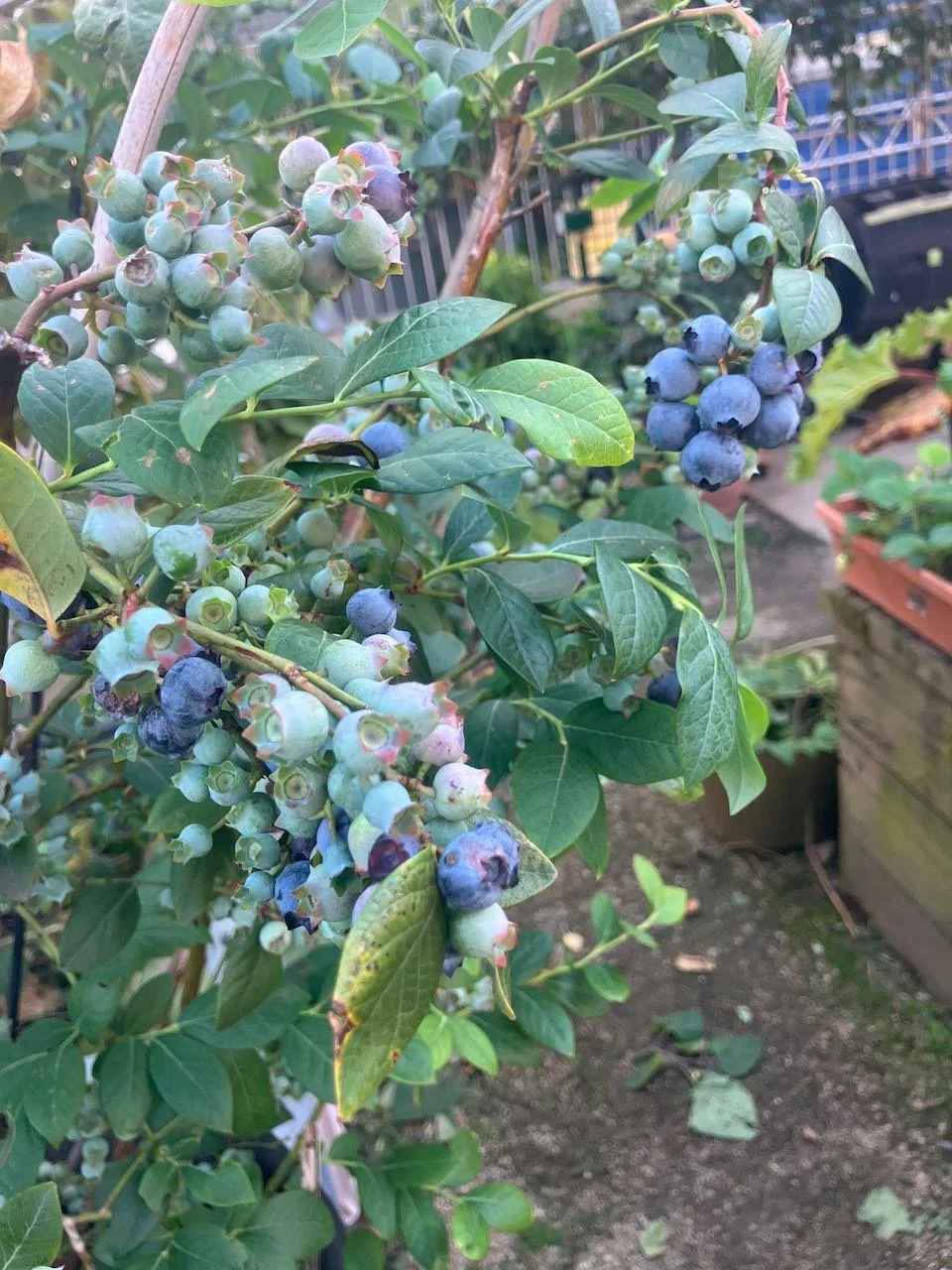
A bountiful harvest of Blueberry Kisses
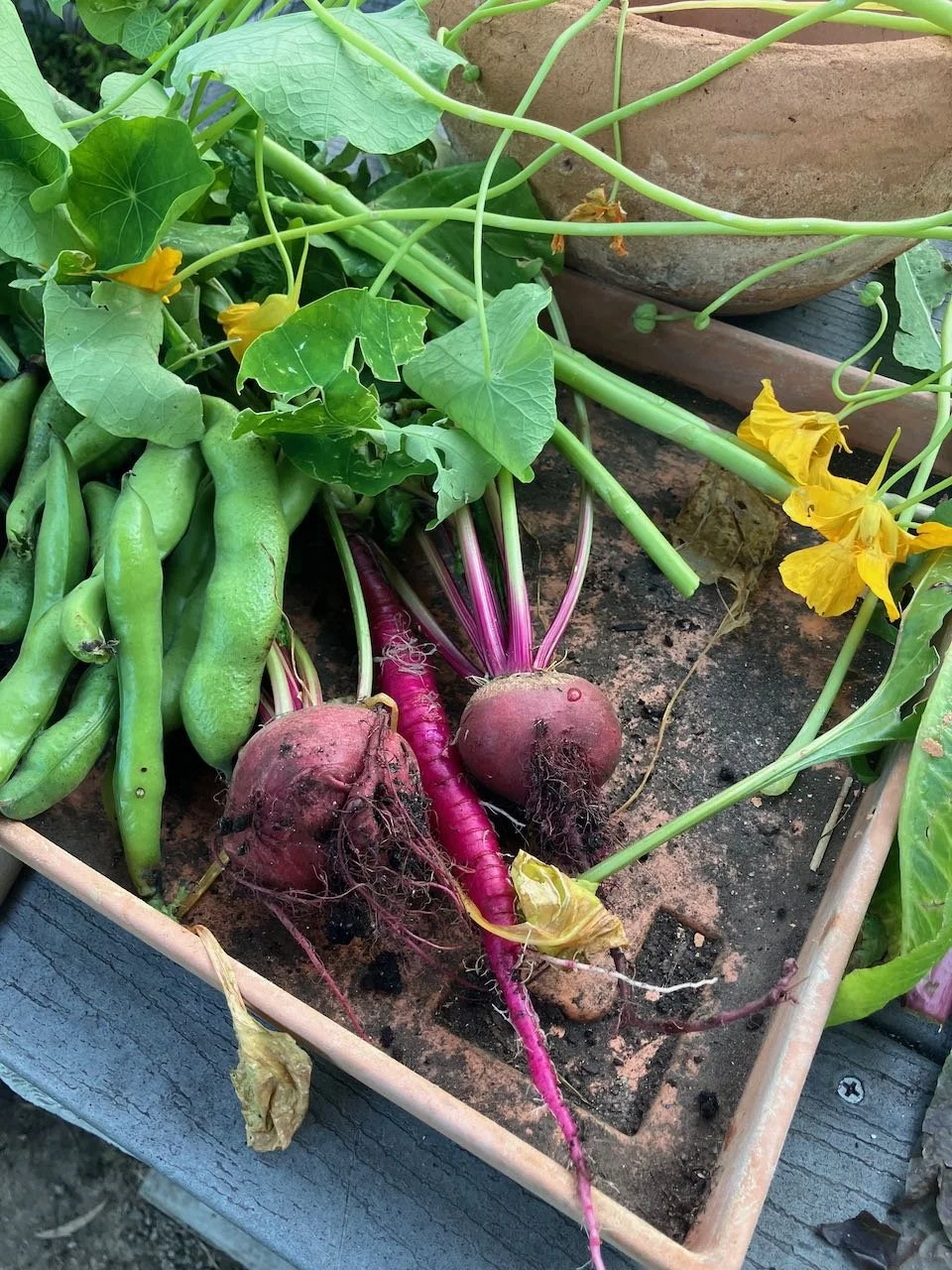
Broad beans, asparagus, beetroots, and a slender Fire Candle radish to spice things up
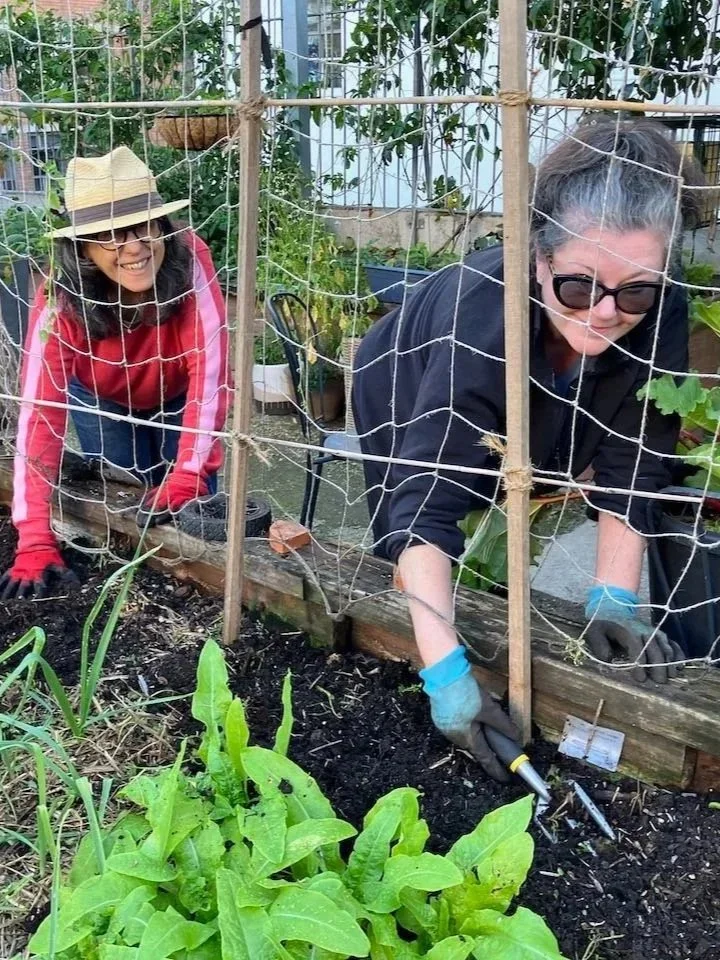
Giving the soil a refresh with some home-made compost – ready for some snake beans and Purple King climbing beans
Some successes
What’s bringing us joy …
Both blueberry bushes were laden with fruit, especially the Kisses variety. We began to harvest them in the first week of October.
Free of aphids so far, the broad beans thrived. As well as enjoying the beans themselves, we shared a recipe for using the pods in a soup, so they’re not wasted.
Our two yacon grow bags produced bountiful collections of sweet crisp tubers, which we enjoyed in salads as well as roasted. They make great air-fryer chips.
Asparagus spears popped up like little aliens. They grow so fast they can’t wait until the working bee harvest and need to be picked during the week as well.
We were able to harvest a few delicious candy-striped Chioggia beetroot every week since mid-September, along with their leaves. The Golden variety was a bit slower.
The sweet peas began blooming in August, initially dominated by the deep purple Triple G. The fragrant Blue Shift variety came next, although their colour shift from pink to blue as the blooms age was less noticeable than we’d hoped.
And a couple of rows of French Breakfast and Fire Candle radishes were a quick success. The Fire Candle was true to its name – long and bright red.
What we’re keeping a hopeful eye on …,
The banana bunch was continuing to swell as the weather warmed, under its protective hessian covering. Fingers crossed.
The potted Japanese shishito and Aleppo peppers were cut back to try to get another year out of them. So far, so good.
One ‘winter’ tomato was still producing fruit in mid-October (variety unknown but it is looking like a Kumato).
We’ve sown lots of parsley everywhere in an attempt to keep it available by reaching a critical mass of plants.
A few disappointments
Our snow peas produced very small harvests. We had good results with Yakumo before, but not this time. Unsure whether this was a function of the soil, or the weather. The turnips (Golden Globe and Hidabeni Red) also failed to thrive, possibly due to repeated disturbance of the seedlings by rats. Only a few plants developed to maturity, producing leaves but very small or non-existent roots.
Our purple sweet potato harvests were delicious but both quite small. Grow bags might not be the best option for them. We’ll try the Molokai deep purple variety this year in the trough pot near the tumblers, and the Okinawa/Hawaiian in a large pot or re-purposed garbage bin.
The rats developed a highly destructive taste for brassicas this year, decimating a lovely crop of purple kholrabi in late August just before it was ready to harvest, and devouring the just-developing white kohlrabi along with the growing shoots of the Romanesco broccoli, which had all been thriving under their protective (or so we thought) wire mesh ‘hats’.
The two Sunrise Bumble Bee tomato plants kept growing and producing flowers through winter and into spring, but didn’t set fruit. We took them out in early October and found their roots covered in root-knot nematode nodules. This might have been expected, given that the plants had been in the ground for over a year, but we’ll sow a mustard biofume crop to try to reduce the risk of nematode damage to our next plantings in this bed.
Planning for summer
Two varieties of zucchini seedlings – yellow Crookneck and stripy Cocozelle – were planted out in the ‘Long’ bed after our brassicas lost their battle with the rats. We’re also trying again with the small round variety, Ronde de Nice; we enjoyed this last summer but found its growth habit wasn’t suitable for the two-stake ‘tree’ method, as it produced multiple side-shoots. This time we’ll try a tripod support and let it sprawl a bit in the perennial bed.
We replanted the yacon and jerusalem artichokes (two grow bags of each), and found proper homes in a couple of pots for our new seedling perennials from Living Mudflower – skirret (Sium sisarum), and tree onions, aka Egyptian / Walking / Topsetting onions etc (Allium × proliferum).
We started seeds of Santorini tomatoes, our most successful variety last year, as well as a couple of cucumbers and Golden Nugget, a small pumpkin variety.
Strawberry experiments continued, monitoring each variety weekly to record the status of flowers, fruit and runners, and removing the fruit and flowers of our new varieties to give them a season to settle in and develop strong crowns. In the meantime, the original (unidentified) plants – in the strawberry trough pots and the half of the People's Bed nearest the gate – were covered in flowers and slowly ripening fruit from mid-Septembert. We also reorganised the existing hanging strawberry baskets and added a third basket to try some runner-producing alpine varieties.