IN THE KITCHEN GARDEN – WINTER 2026
Report from the kitchen garden, AUGUST 2026
Successes
What’s bringing us joy …
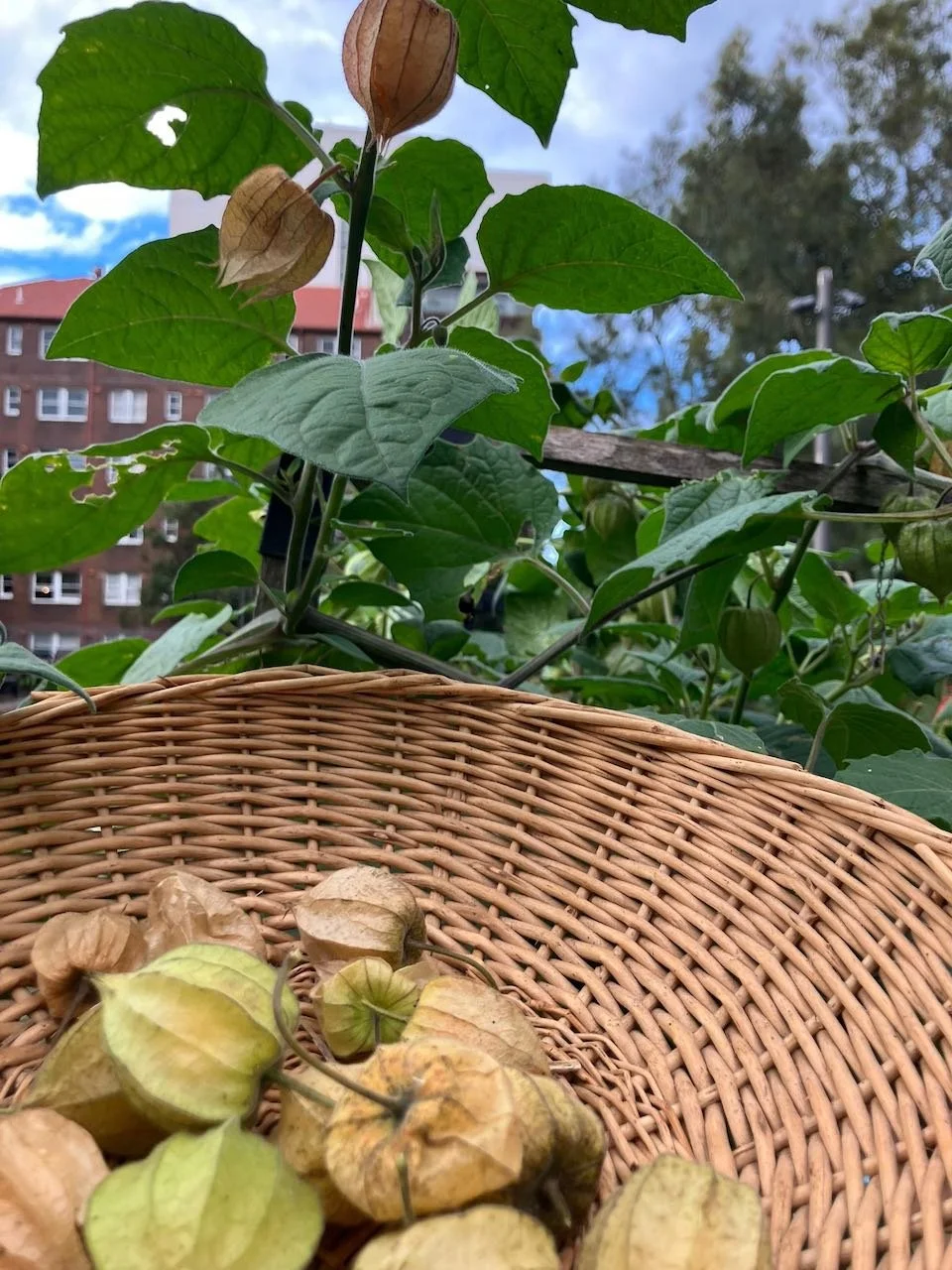
Cape gooseberries: Our main self-sown plant is healthy, vigorous and productive – hassle-free, with the fruit protected from pests by their little lanterns, and no three-stripe beetles eating the leaves in the cool weather.
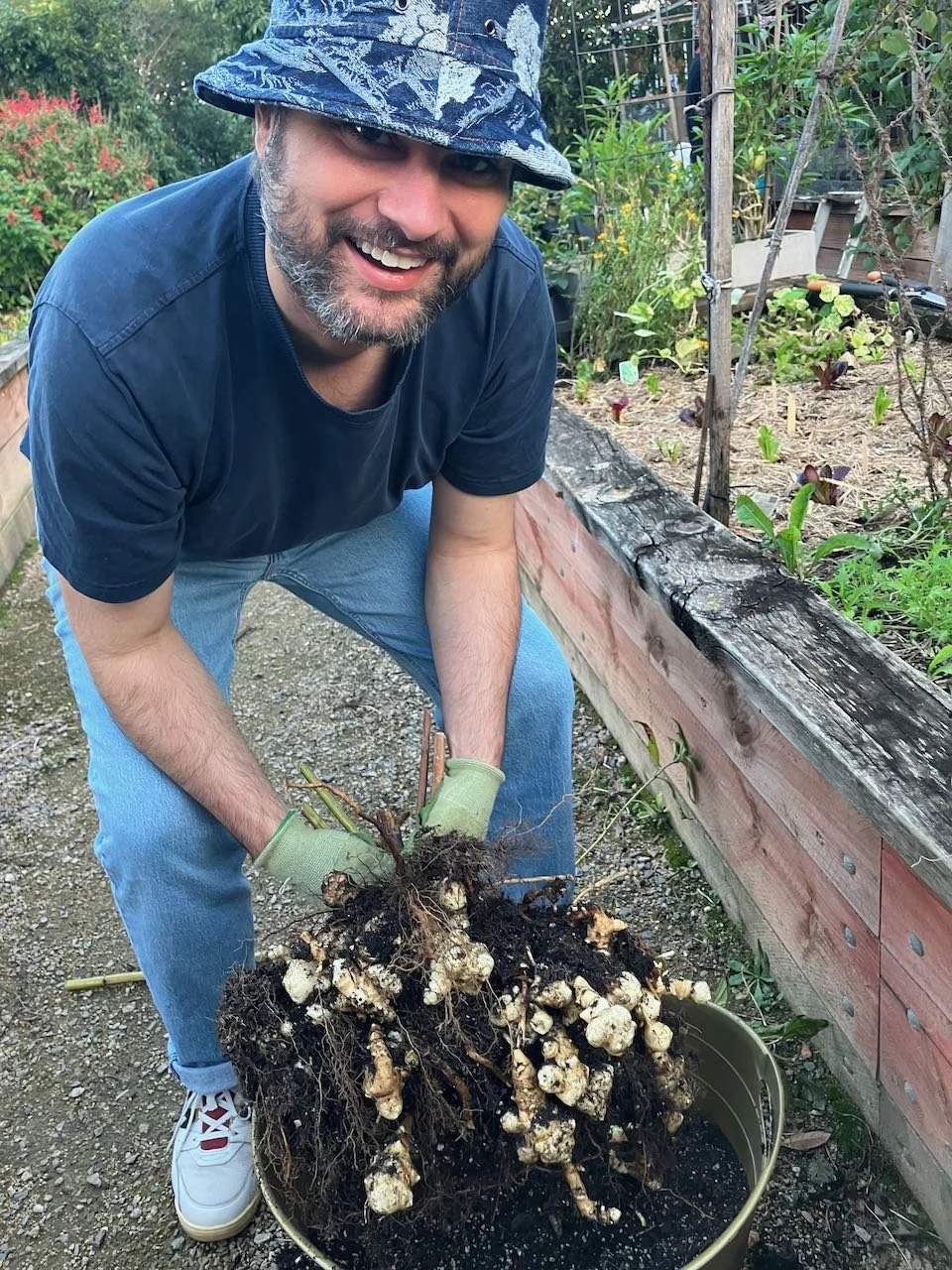
Jerusalem artichokes: They too have been hassle-free – quietly doing their own thing, flowering for the first time with the olla spikes helping keep their growbags moist through summer. We enjoyed double last year’s harvest, with no pest issues.
Flowers and foliage: We’re loving the variegated nasturtiums climbing up the trellis near the gate, and the first of the sweet peas, although only deep purple Triple G is flowering so far (the more fragrant High Scent, America, and Blue Shift are yet to bloom).
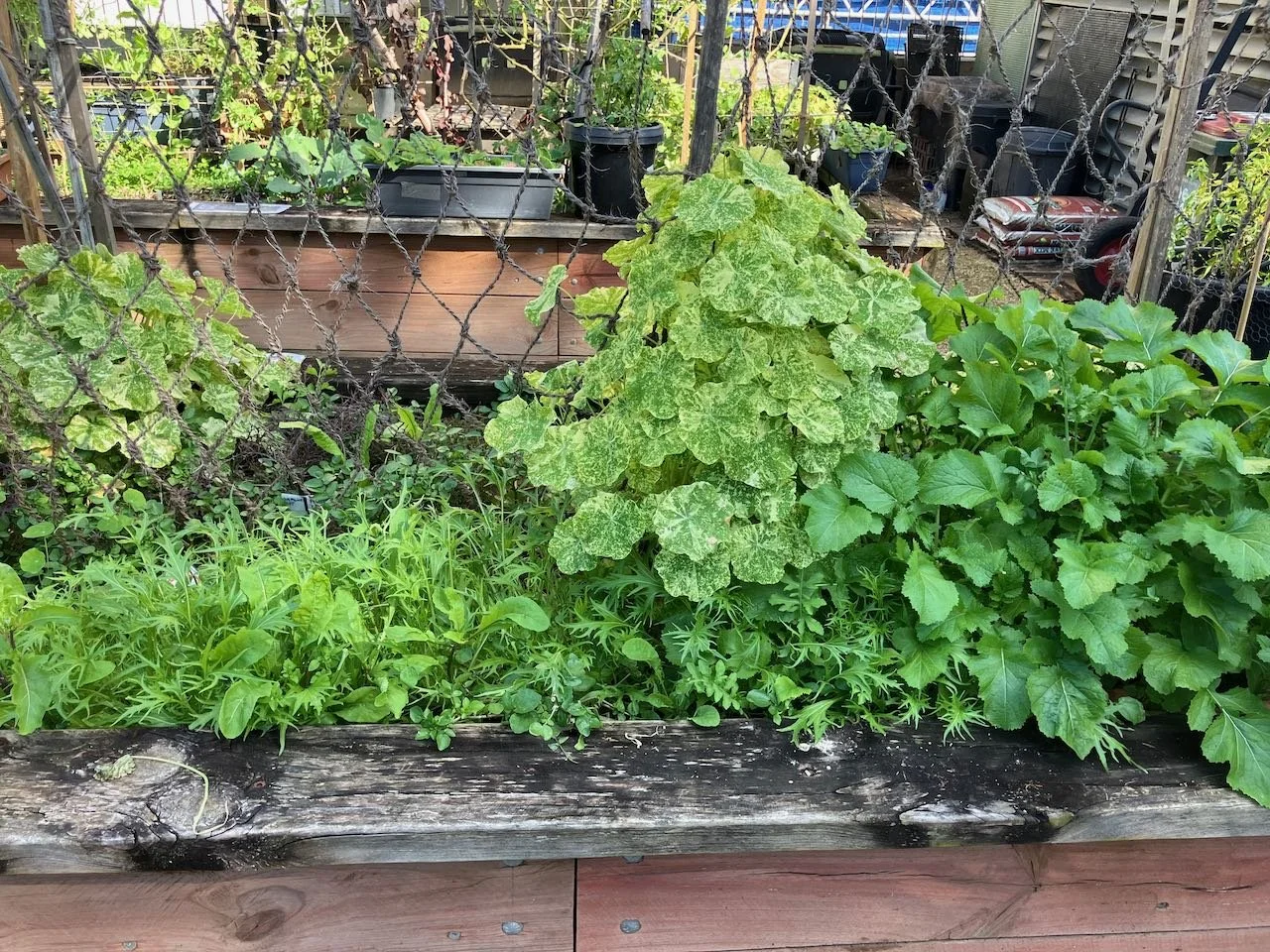
A bed full of greens: Three types of mustard greens were sown densely in one half of the gate bed in response to some nematode damage to the previous crop of cucumbers, and they have come up beautifully (Mizuna, ‘Wasabi’ greens, Ruby Streaks). At the other end, QPS seedlings of rainbow chard, cos lettuce and smooth leaf endive are also doing well, with a trellis of snow peas starting their climb in the centre.
What we’re looking forward to …
The yacon has flowered, and we should be able to sample its juicy tubers in the next few weeks.
New pepinos have appeared, which should ripen before the stink bugs return. Both blueberry bushes are showing berries, although the leggier Kisses variety seems a bit more productive than Burst this year for some reason. And the banana bunch continues to swell, albeit more slowly during winter.
Supplemented with seedlings from QPS, the kholrabi (white and purple) and Romanesco broccoli seem to be thriving; we’ve maintained the wire mesh rat protection just in case.
The turnips (Golden and Hidabeni Red) and beetroots (Golden and Chioggia) are chugging along.
What we’re keeping a hopeful eye on …
The two Sunrise Bumble Bee tomato plants continue to thrive, producing flowers but not setting much fruit; we’re hoping this may change as the weather warms. We also have a healthy self-sown specimen in the ‘roots’ bed (possibly Tigerella) with some good-looking flowers and fruit that we hope will develop before the pests arrive. We plan to pot up some shoots from all these plants to try to get a head start on summer planting.
The broad beans are looking very healthy so far and have just started to flower, but we remain alert to industrious ants starting to farm aphids – escalating their current enjoyment of the plants’ own ‘nectaries’.
Steady as she goes …
The rosemary cages have continued to work well in the People’s bed.
The potted Japanese shishito and Aleppo peppers are still flowering and fruiting; we’ve cut them back to try to get another year out of the plants.
Activities
Strawberry experiments: In the end of the People's Bed furthest from the gate, we are testing additional strawberry cultivars to extend the fruiting season and increase overall production, as well as reduce the need to deal with runners every year. We may also add some non-runner-producing ever-bearing varieties as a second row in future. The original, unidentified strawberry variety (which we think is summer-bearing) remains in the strawberry trough pots and in the half of the People's Bed nearest the gate. We also plan to reorganise the existing hanging strawberry baskets and add a third basket to try some runner-producing alpine varieties. We will monitor each variety weekly, recording the status of flowers, fruit and runners.
Planning for spring is underway, and we are re-thinking what to grow in the perennial bed. Strong contenders include more shishito and Aleppo peppers.
We have also sourced a couple of interesting seedling perennials from Living Mudflower, including:
skirret (Sium sisarum) – an ancient perennial root vegetable in the carrot and parsley family, which we plan to grow in a pot. It produces clusters of sweet white roots that apparently taste like a mix of carrot, parsnip, and potato.
tree onions, also known as Egyptian onions, Walking onions, Topsetting onions etc (Allium × proliferum) – a very productive perennial that grows small onions on top of the flower stalk. It is meant to be the hardiest of all the edible onions and is not bothered by heat, drought or cold. Again, planned for a trough pot.