IN THE BUSH FOOD GARDEN – AUTUMN 2026
Report from the BUSH FOOD garden, MAY 2026
Successes
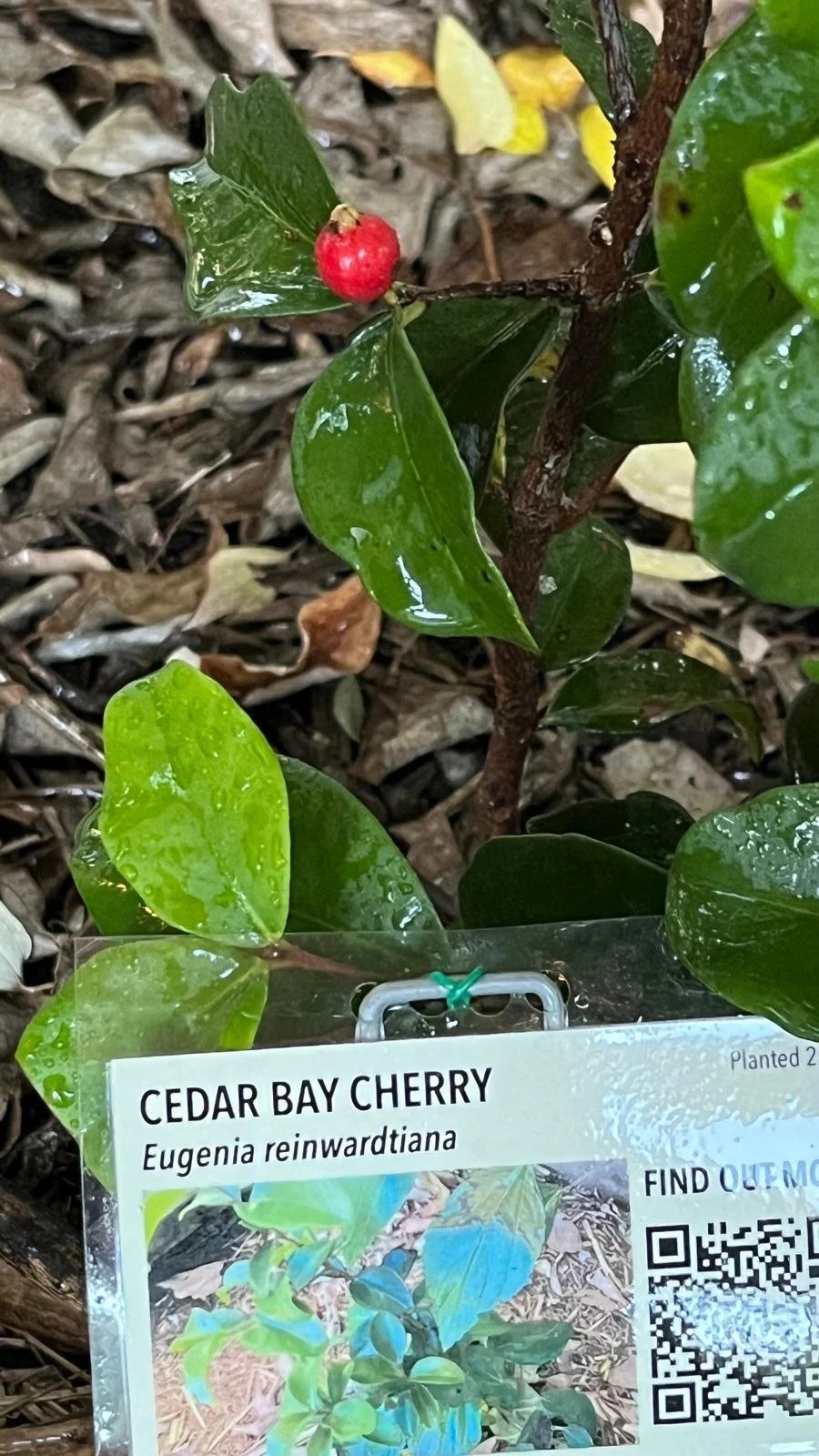
A single, bright red fruit appeared on the slow-growing cedar bay cherry under the mulberry. It will benefit from a bit more sun once the mulberry is cut back.
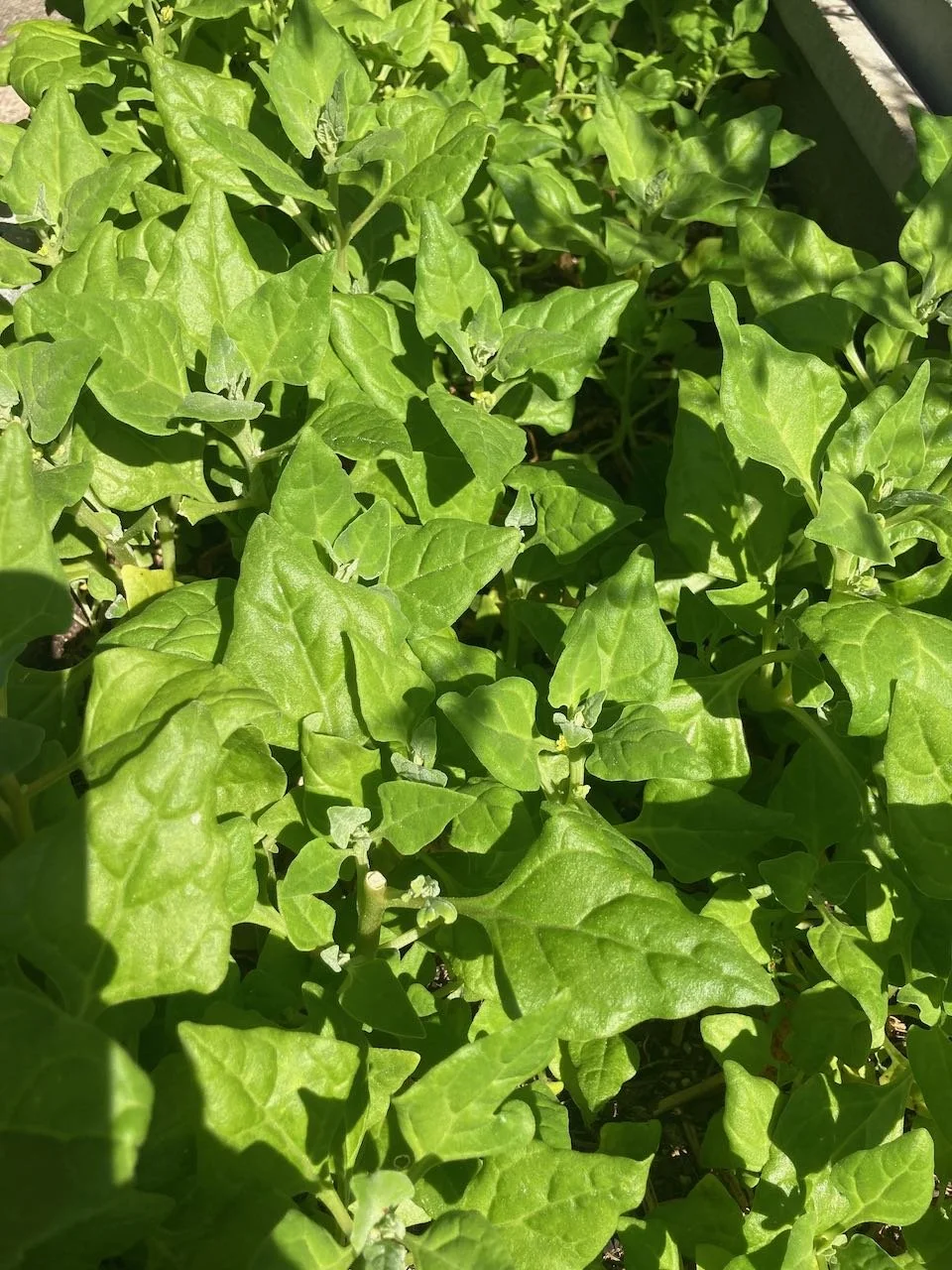
The warrigal greens continue to thrive, and are harvested regularly as a ‘spinach’ alternative by those in the know.
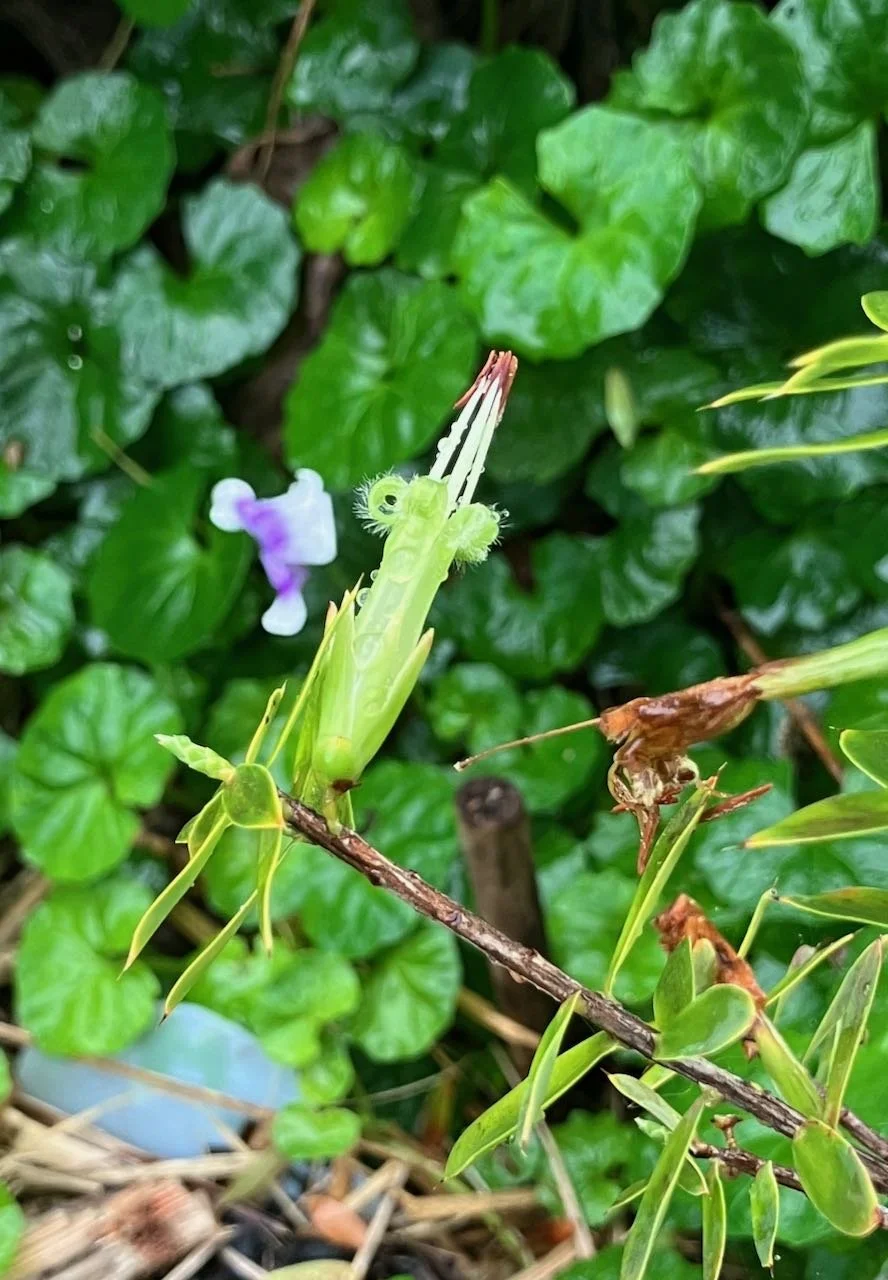
Flowers have begun to appear on the rare ‘Five-corners’ plant (Styphelia viridis). Part of the endangered Eastern Suburbs Banksia Scrub, this little plant produces its tubular flowers during winter followed by edible berries in spring.
·The apple berry vines in the ‘shady corner’ trough pot are still doing well, and we are looking forward to experiencing their ‘stewed apple’ fruit in spring.
Challenges
It seems that our Prostanthera bushes may have reached the end of their lives (3-5 years). One of the native thymes (Prostanthera incisa) has started putting on new growth after cutting back, but the other has died, as has the previously vigorous native mint (Prostanthera ovalifolia). The up-side is that removing these dead bushes has opened up some sunny spots that we can use for murnongs in spring.
The bush tomato became quite straggly and has largely died back, perhaps due to not enough sun – and/or too much water. It produced a network of underground runners, so hopefully will send up some new shoots in due course, especially now that the bed is receiving a bit more sun.
Activities
The mulberry has been cut back over the path and perennial bed where we can reach it, but we do need to figure out how to reduce its size more substantially overall. Otherwise, lots of pruning has been going on across the other trees and shrubs.
A cutting of the native rosella (Hibiscus heterophyllus) has been planted in a pot, with an eye on succession in case the current tree fails.
We tracked down a nursery that had ‘river mint’ available and ordered a couple of plants, which we will start in a ‘wicking’ trough pot, as it likes wet feet – probably placed under the mulberry.
We have sourced some seeds of the fleshier variety of murnong or yam daisy (Microseris walteri) from Black Duck Foods, which we will start now in seed trays and plant out in September.
We’re hoping to harvest some of our chocolate lily (Arthropodium strictum) tubers soon. These small tubers are said to be juicy and slightly sweet, and can be enjoyed raw or roasted.