|
Welcome to our latest newsletter. Read news and updates from around the garden. ͏ ͏ ͏ ͏ ͏ ͏ ͏ ͏ ͏ ͏ ͏ ͏ ͏ ͏ ͏ ͏ ͏ ͏ ͏ ͏ ͏ ͏ ͏ ͏ ͏ ͏ ͏ ͏ ͏ ͏ ͏ ͏ ͏ ͏ ͏ ͏ ͏ ͏ ͏ ͏ ͏ ͏ ͏ ͏ ͏ ͏ ͏ ͏ ͏ ͏ ͏ ͏ ͏ ͏ ͏ ͏ ͏ ͏ ͏ ͏ ͏ ͏ ͏ ͏ ͏ ͏ ͏ ͏ ͏ ͏ ͏ ͏ ͏ ͏ ͏ ͏ ͏ ͏ ͏ ͏ ͏ ͏ ͏ ͏ ͏ ͏ ͏ ͏ ͏ ͏ ͏ ͏ ͏ ͏ ͏ ͏ ͏ ͏ ͏ ͏ ͏ ͏ ͏ ͏ ͏ ͏ ͏ ͏ ͏ ͏ ͏ ͏ ͏ ͏ ͏ ͏ ͏ ͏ ͏ ͏ ͏ ͏ ͏ ͏ ͏ ͏ ͏ ͏ ͏ ͏ ͏ ͏ ͏ ͏ ͏ ͏ ͏ ͏ ͏ ͏ ͏ ͏ ͏ ͏ ͏ ͏ ͏ ͏ ͏ ͏ ͏ ͏ ͏ ͏ ͏ ͏ ͏ ͏ ͏ ͏ ͏ ͏ ͏ ͏ ͏ ͏ ͏ ͏ ͏ ͏ ͏ ͏ ͏ ͏ ͏ ͏ ͏ ͏ ͏ ͏ ͏ ͏ ͏ ͏ ͏ ͏ ͏ ͏ ͏ ͏ ͏ ͏ ͏ ͏ ͏ ͏ ͏ ͏ ͏ ͏ ͏ ͏ ͏ ͏ ͏ ͏ ͏ ͏ ͏ ͏ ͏ ͏ ͏ ͏ ͏ ͏ ͏ ͏ ͏ ͏ ͏ ͏ ͏ ͏ ͏ ͏ ͏ ͏ ͏ ͏ ͏ ͏ ͏ ͏ ͏ ͏ ͏ ͏ ͏ ͏ ͏ ͏ ͏ ͏ ͏ ͏ ͏ ͏ ͏ ͏ ͏ ͏ ͏ ͏ ͏
|
Welcome! There’s plenty to cover since our last newsletter – a whole year ago! A big thank you to all of you who have already renewed your membership for 2026/27. If you don’t recall receiving your renewal invoice – or you have any questions or concerns – please get in touch. The annual fee is still just $40 so we hope you can continue your support. And if you’re not yet a member, now is a great time to sign up. Find out how. As a member, you can be as involved as you want in the garden, from getting your hands in the soil at a working bee and sharing in planting and harvesting, to just taking pleasure in the garden and supporting a community organisation. Spring planning is now in full swing and we’d love to see you in the garden. Here’s to another productive year ahead! Your 2026 committee
Left to right: Cathy Gray, Helen Panckhurst (Secretary), Janine Baker (Treasurer), Kitty Howard, Edwina Morris, Maree Sheehan (co-Chair), Jo Packer (co-Chair), Terry Chesher (who continues to provide her invaluable insights and experience as an ex-officio member).
|
Greening the city – community consultationHere’s a heads-up that the City of Sydney will shortly be seeking your views on a new draft Community Greening Framework – a suite of new and updated policy documents covering community gardens, footpath and laneway gardens and community greening volunteers. We are hugely grateful for the ongoing support and encouragement provided by the council and its staff. Our garden is one of 19 across the City of Sydney that benefit from the council’s extensive community greening programs.
|

|
The aim of the new framework and policies is to make participating in greening programs easier for the community, expand the City's support and provide clarity about requirements and responsibilities. The documents should be available very soon through Sydney Your Say on the Council’s website. We encourage you to check them out and share your views. |
|
|
|
Weird and warming weather has been confusing the plants across all areas of the garden, but generally, thanks to sterling work by the weekly ‘bees’, everything is thriving. Don’t forget, once you’re a member, you’re always very welcome at working bees – even just to drop in to say hello and find out what’s happening. Whatever level of involvement you can offer, it’s always appreciated. Winter working bee times:
Wednesdays and Saturdays, 8am–10.30am in the Potager garden
Sundays 3–5pm in the Kitchen and Bush Food gardens Summer working bee times (from 4 October)
Wednesdays and Saturdays 8am–10am in the Potager garden
Sundays 4–6pm in the Kitchen and Bush Food gardens
|
Going bananasBanana plants at both ends of the garden went a little, well, ‘bananas’ this year, producing spectacular flowers, followed by large bunches that plumped up over several months until they could be cut down and shared among members to ripen at home.
|
|
Three interesting facts about bananas: The ‘trunk’ of a banana plant is not wood. It’s a pseudo-stem made of tightly packed, overlapping leaf sheaths. Each individual ‘stem’ fruits only once. After producing a single bunch of bananas, the stem dies back, providing nutrients for the next ‘daughter’ stem as it breaks down. Bananas grow curved because of a process called negative geotropism. Instead of pointing down toward the earth, the fruit fights gravity and turns upward toward the sun.
|
What’s been giving us joyIt’s been another year of growing and learning – cultivating crops we love, as well as experimenting with less familiar plants and varieties. Check out some highlights through the new Stories section of our website, which features seasonal updates from each of the garden areas.
|
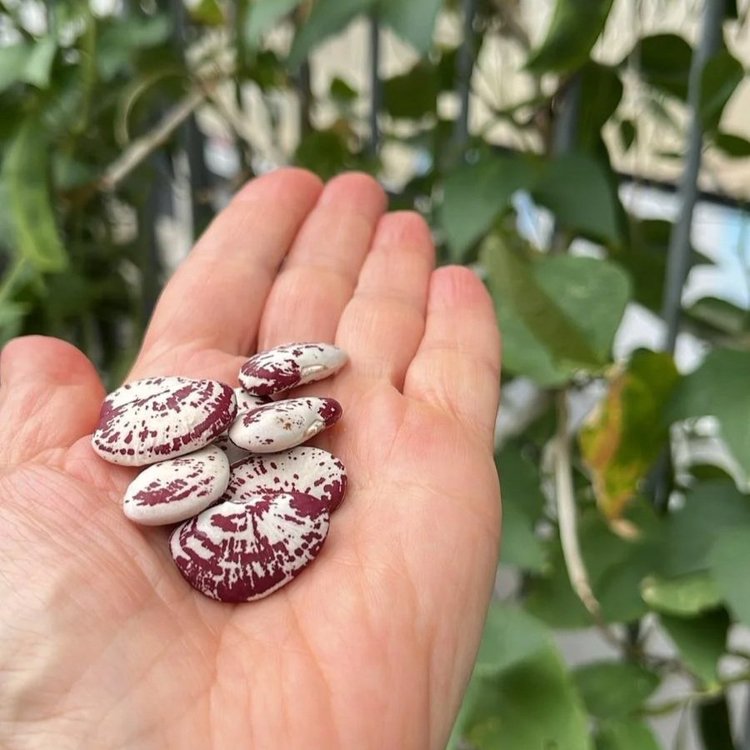
These gorgeous Madagascar beans came from the Potager garden last summer. A vigorous climbing tropical lima bean, the vine dies off and re-shoots for several years. Read about what’s been happening in the Potager garden over the past 12 months, from vertical zucchini experiments to early brassica success and enterprising insect engineering. |
|
|
|
|
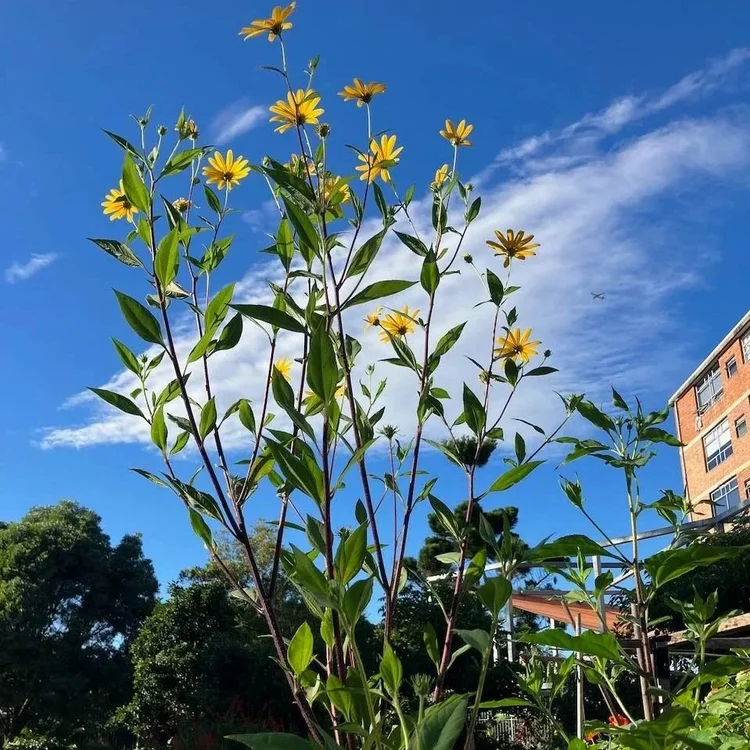
Jerusalem artichokes in the Kitchen garden grew tall in their felt ‘growbags’ and put out delightful mini sunflowers (yes, they are related). We doubled the harvest with the help of some ceramic ‘olla spikes’ to keep the soil moist. Read this year’s Kitchen garden news, from summer tomatoes and heirloom zucchini to forays into several varieties of mustard greens and deliciously mild Japanese shishito peppers. |
|
|
|
|
We’ve been thrilled to see delicate little flowers appearing on our ‘Five Corners’ plants in the Bush Food garden. Five Corners (Styphelia viridis) is part of the endangered ‘Eastern Suburbs Banksia Shrub’ plant community, and we’re very pleased to be doing our bit for its re-introduction. Explore updates from the Bush Food garden across the seasons. |
|

|
|
|
Events are wonderful opportunities for members to come together outside regular working bees, to share, learn – and just chat. Keep your eye out for announcements, and in the meantime, save the date for our next ‘Long Table’ lunch, scheduled for Sunday 1 November.
|
AUTUMN ‘LONG TABLE’ – April 2026
|
|
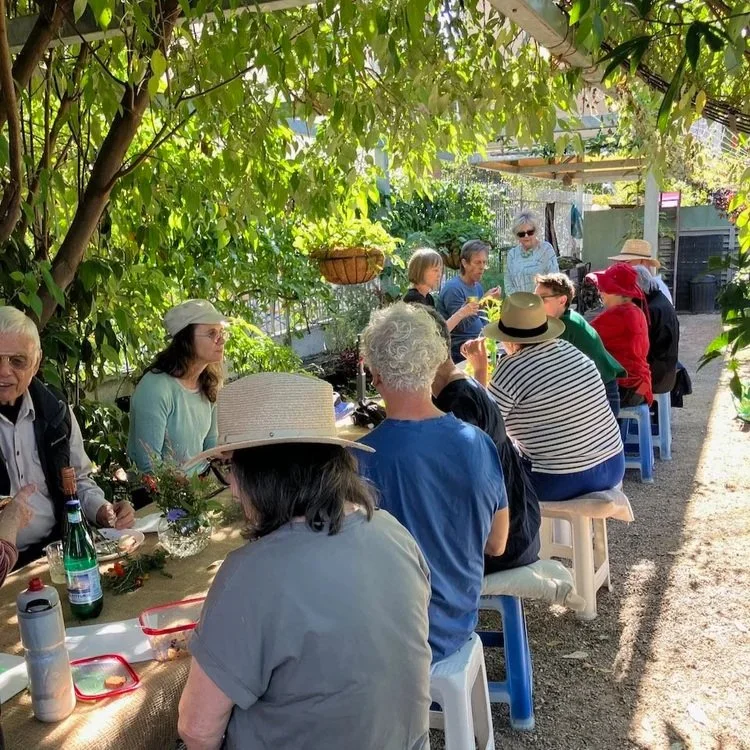
Our Long Table lunch in April celebrated both the delights of summer and the coming crispness of autumn.
|
|
|
|
|
|
|
|
|
Sharing food and conversation in the garden is not only a great way to connect with fellow garden lovers, but is also, very simply, good for the soul.
SAVE THE DATE – put 1 November in your diary now for our next gathering and stay tuned for details.
|
|
|
|
|
CLOSE-UP – HOW TO PICK HERBS
|
|
Our Close-up series focuses on top tips and deep dives to help you get the most out of what the garden has to offer. This issue, we focus on how to harvest herbs sustainably, so their flavoursome foliage can continue to be available for everyone. For all herbs, use scissors or herb snips if possible, and don’t take more than a few stems at a time from a single plant.
|
|
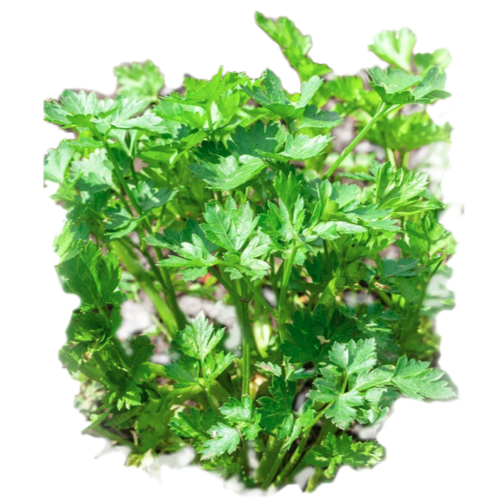
Rosette-type herbs like parsley and coriander grow in a circular cluster close to the ground, pushing new growth out from the center. Snip individual stems from the outer edge of the cluster, close to the base.
Don’t just pick some leaves – taking the whole stalk instead encourages these plants to keep growing more.
Never take the new leaves in the centre. |
|
|
Woody herbs like rosemary, thyme, oregano and sage develop tough, fibrous, bark-like stems and grow like small shrubs. Use scissors to cut the top 5–10cm of soft flexible growth.
Snip just above where the leaves emerge, and avoid cutting off woody stems as they won't re-grow.
Once cut, strip leaves from stems. |
|

|
|

|
Leafy herbs like basil, mint, lemon balm and tarragon have soft, fleshy stems with opposite leaf pairs that branch out when cut. Snip the stems just above a leaf node (a pair of leaves) near the top.
This forces bushier growth.
Never strip lower leaves or cut the main stems. |
|
|
STAY IN TOUCHIn between newsletters, follow us on Instagram. Members can also stay in touch via our various WhatsApp groups, intended for practical communications about things like rosters or working bees; they’re also great for sharing photos or useful resources you’ve come across. Let us know if you’re a member and would like to be added to these groups. And don’t forget, winter times for working bees are Wednesdays and Saturdays from 8am (Potager garden), and Sundays from 3pm in winter and from 4pm in summer (Kitchen and Bushfood gardens). Hope to see you in the garden!
|
|
|
|