|
Welcome to our first newsletter for the year. Read updates from around the garden - and don’t miss our autumn meet-up on Saturday 1 April.͏ ͏ ͏ ͏ ͏ ͏ ͏ ͏ ͏ ͏ ͏ ͏ ͏ ͏ ͏ ͏ ͏ ͏ ͏ ͏ ͏ ͏ ͏ ͏ ͏ ͏ ͏ ͏ ͏ ͏ ͏ ͏ ͏ ͏ ͏ ͏ ͏ ͏ ͏ ͏ ͏ ͏ ͏ ͏ ͏ ͏ ͏ ͏ ͏ ͏ ͏ ͏ ͏ ͏ ͏ ͏ ͏ ͏ ͏ ͏ ͏ ͏ ͏ ͏ ͏ ͏ ͏ ͏ ͏ ͏ ͏ ͏ ͏ ͏ ͏ ͏ ͏ ͏ ͏ ͏ ͏ ͏ ͏ ͏ ͏ ͏ ͏ ͏ ͏ ͏ ͏ ͏ ͏ ͏ ͏ ͏ ͏ ͏ ͏ ͏ ͏ ͏ ͏ ͏ ͏ ͏ ͏ ͏ ͏ ͏ ͏ ͏ ͏ ͏ ͏ ͏ ͏ ͏ ͏ ͏ ͏ ͏ ͏ ͏ ͏ ͏ ͏ ͏ ͏ ͏ ͏ ͏ ͏ ͏ ͏ ͏ ͏ ͏ ͏ ͏ ͏ ͏ ͏ ͏ ͏ ͏ ͏ ͏ ͏ ͏ ͏ ͏ ͏ ͏ ͏ ͏ ͏ ͏ ͏ ͏ ͏ ͏ ͏ ͏ ͏ ͏ ͏ ͏ ͏ ͏ ͏ ͏ ͏ ͏ ͏ ͏ ͏ ͏ ͏ ͏ ͏ ͏ ͏ ͏ ͏ ͏ ͏ ͏ ͏ ͏ ͏ ͏ ͏ ͏ ͏ ͏ ͏ ͏ ͏ ͏ ͏ ͏ ͏ ͏ ͏ ͏ ͏ ͏ ͏ ͏ ͏ ͏ ͏ ͏ ͏ ͏ ͏ ͏ ͏ ͏ ͏ ͏ ͏ ͏ ͏ ͏ ͏ ͏ ͏ ͏ ͏ ͏ ͏ ͏ ͏ ͏ ͏ ͏ ͏ ͏ ͏ ͏ ͏ ͏ ͏ ͏ ͏ ͏ ͏ ͏ ͏ ͏ ͏ ͏ ͏
|
Welcome to our first newsletter for 2023. The expanded garden is well and truly up and running now, thanks to our wonderful teams of active volunteers. There will be lots of news and interesting tidbits of information to share in the coming year, so we plan to bring you a newsletter early in each season, in March, June, September and December. Our 2022 AGM was held on 8 December, and the 2023 committee includes both experienced and newly appointed members – all keen to build on the success achieved so far as well as explore new opportunities for engaging with garden members, supporters and the local community. Find out about the new committee. AUTUMN MEET-UP – SATURDAY 1 APRILPlease join us for an informal member get-together in the garden to share ideas, ask questions of the committee and garden coordinators, and hear about what’s coming up. Get a refresher tour of the various garden areas, sample some native herbs and maybe even some baked goodies, check out the native beehive – or just have a chat… When: 4–5pm, Saturday 1 April
Where: In the garden
RSVP appreciated
|
|
The garden was celebrated on 12 November last year when the newly refurbished Lawrence Hargrave Reserve was officially opened by Mayor Clover Moore. Pictured among the murnongs (yam daisies) in the bush food garden are (left to right) Councillors Emelda Davis and Jess Scully, garden member Cathy Gray, Clover Moore, Councillor William Chan, and independent state MP for Sydney, Alex Greenwich.
|
WELCOME TO OUR NATIVE BEEHIVE
|

|
Thanks to the City of Sydney, we were thrilled to receive our native beehive in early March. These are sugarbag bees – the only native bee species in the Sydney area that forms social nests; most of the other 500+ species – like the gorgeous teddy bear bee – are solitary. |
|
|
Sugarbag bees are very small, and stingless, with about 6,000–10,000 living in each hive. We host them in the garden as pollinators, not for their honey, because each hive produces only a small amount – about 500ml per year – of honey in Sydney’s climate. Find out more at australian.museum/learn/animals/insects/stingless-bee/ |
|

|
|
THE TREES ARE IN!At last – we have trees in the large concrete planters!
|
|
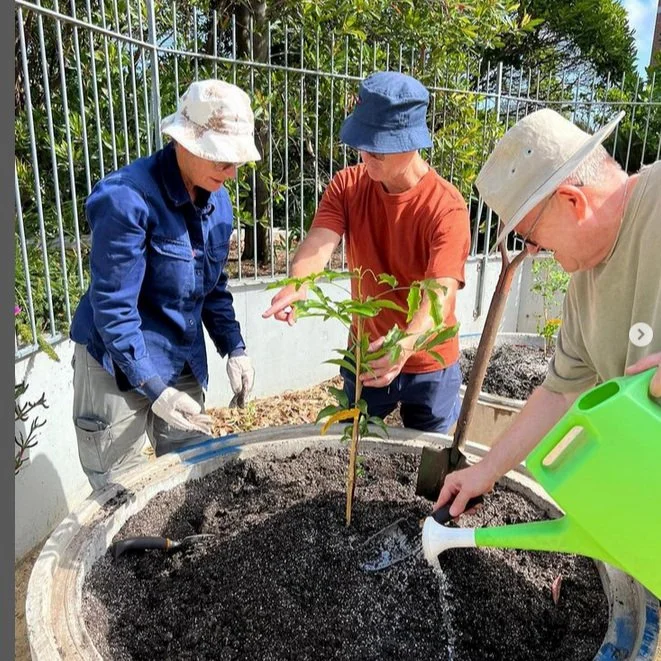
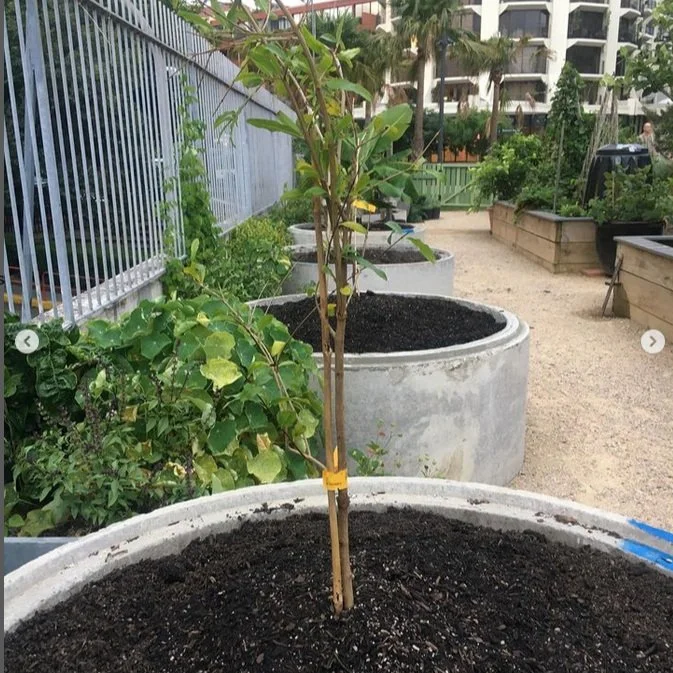
Our initial drainage testing found waterlogging, so we removed the soil, stripped out the drainage mesh and gravel, retested, and then added a new soil mix with perlite to get more air through the soil and improve drainage. In the planters at the rear of the park near the shade structure are a Brazilian cherry, jujube, small-leaved tamarind and black sapote. |
|
|
And up the front in the potager garden we have a kumquat, a loquat, a banana tree and two different pomegranates, with two varieties of persimmon still to come. Next on the agenda is establishing understorey herbs and flowers around each tree. Photo by Jackie Wark: Liz, Paul and Daniel plant in the black sapote |
|
|
|
AROUND THE GARDENHighlights from 2022 and plans for the coming year.
|
|
A lush year in the rambling potager garden. We built up the soil in the front garden (behind the bench seats) and plantings have thrived, although we are still working out how to keep the front lawn healthy in the face of many doggie deposits. The wicking bed is performing really well, with watercress growing all through the summer season; a compost-based bed proved perfect for nitrogen-lovers such as zucchinis and potatoes; and a variety of flowers have kept the pollinators fed. Our aims for the coming year include expanding the wicking bed technology and creating more vertical elements in the garden to get it totally lush. Photo: Bev Morris
|
|
|
|
|
|
|
|
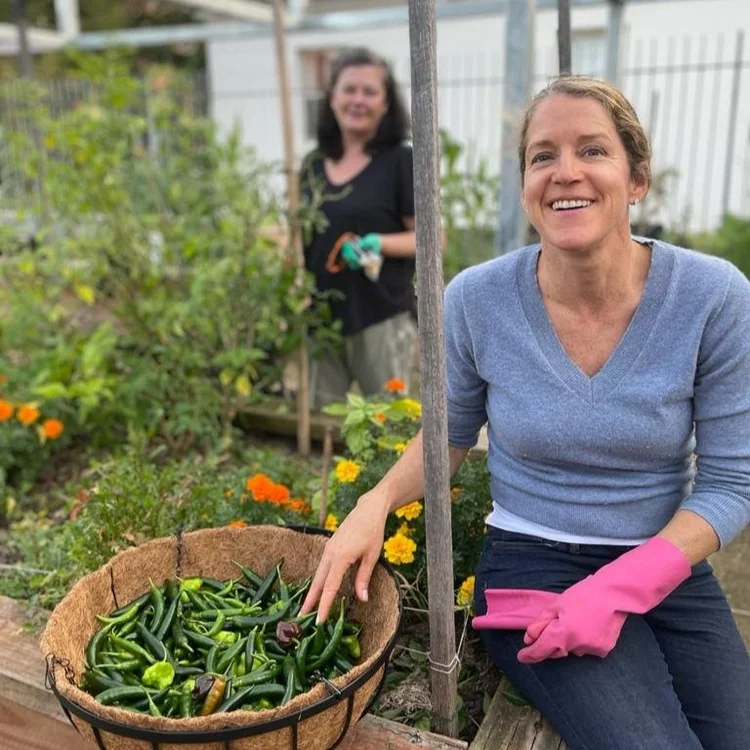
In the kitchen garden, we worked out a seasonal crop rotation plan that guides what we plant in each bed to make the most of our soil. We also established a good selection of herbs in the ‘people’s bed’ along the fence – well used by local residents. Such a wet year meant plenty of growth but also some battles to protect young plants and fruits from slug attack, and although our broad beans developed beautifully, we lost much of the harvest to a severe aphid infestation that even the ladybirds couldn’t keep on top of. Spring/summer plantings produced good crops of several varieties of tomato as well as zucchini, corn, lettuces and radishes, and a couple of mystery vines that sprang up from the compost turned out to be delicious rockmelons. We’re now planning our cooler-weather crop rotation, aiming for more success with brassicas like broccoli and cauliflower, and experimenting again with some more exotic veges such as kohlrabi and different kinds of leafy greens. Photo: Santana (with chillis!) and Kitty
|
|
|
|
|
|
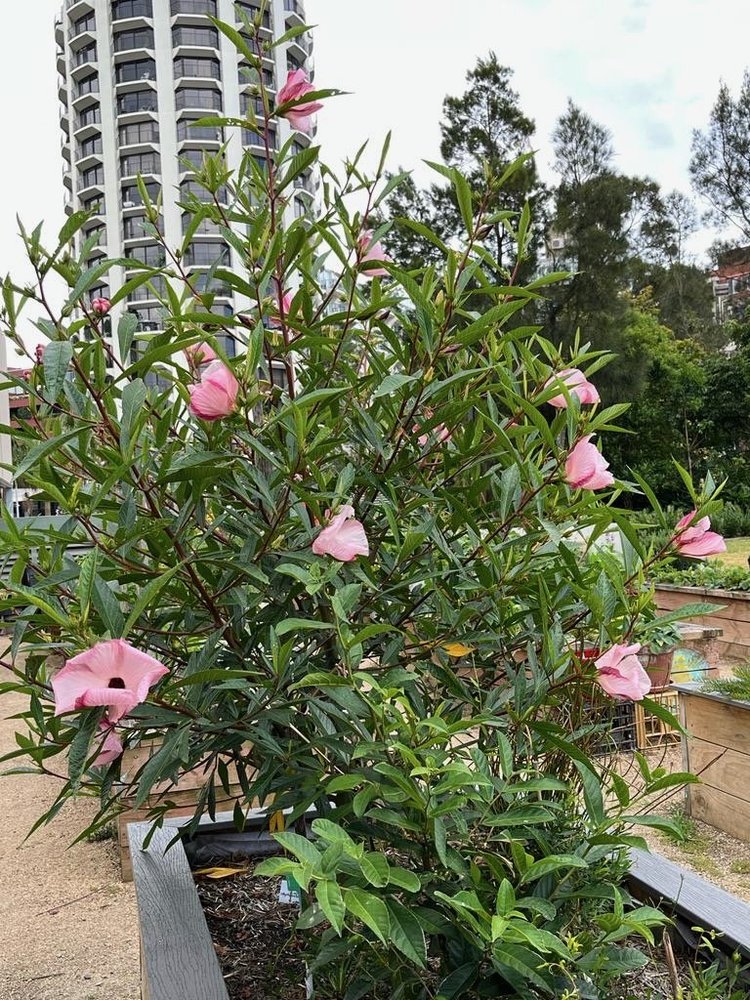
Establishing the bush food garden was a key highlight of 2022. With the help of First Nations horticulturists Terry Lennis and his son Damon, a planting layout optimised for local conditions was devised, and most of the seedlings went in from January to March. Since then, the garden has flourished. Many fruiting plants, like muntries, native raspberries and riberries, are young perennials, and we don’t expect much of a harvest until their second year. But some fruit has already been appearing on our rainforest plants – the native guava and the native mulberries. It’s been a wet year! The native rosella was a particular star, with its daily flush of flowers contributing to some lovely jam and sweets, and the tubers of the murnongs (yam daisies) proved delicious when steamed. The scents and flavours of our aromatic myrtles and native herbs were also appreciated. In the coming year we look forward to more flowering and fruiting as our plants mature, more culinary experiments and info sharing, and more connecting with the culture and knowledge of First Nations people within our community. Photo: Fionnuala Heidenreich
|
|
|
|
|
|
|
Water conservation is always a priority, and given the success of the clay pots and wicking bed in the rambling potager garden, we’re considering extending these into other beds across the garden. A couple of ‘Vegepods’ kindly donated by member Cathy Ryan have been
a boon for getting our seeds going quickly and protecting tender seedlings
until they’re ready to plant out. And then there’s the compost! The local community continues to provide us with plenty of raw material and our two tumblers have now been supplemented by several ‘dome’ composters. Compost is very valuable to the garden, but managing it remains labour-intensive – not to mention a bit smelly – so reviewing how we do it is on the agenda for the coming year. If you’d like to be part of our ‘compost working group’ please get in touch.
|
STAY IN TOUCHIn between newsletters, stay in touch via Instagram, as well as our various WhatsApp groups for the special interest garden areas. These groups are intended for practical communications between members about things like rosters or working bees. But they’re also great for sharing photos or useful resources you’ve come across. If you’d like to be added to these groups, contact one of the relevant coordinators. We’re also planning to make more use of our website this year so stay tuned. Hope to see you in the garden on 1 April, if not before.
|
|
|
|